~10 km circular · ~3.5 hours · moderate · Start: Salcedo, A Pobra do Brollón
The name promises exactly what it delivers, which is rarer than it sounds. Most signposted trails in Galicia are christened for a view or a saint; this one is named for two things you can eat. The PR-G 236 loops out of Salcedo, a hamlet on the eastern rim of the Ribeira Sacra where the territory stops pretending to be about wine and admits it was always about the things that grow when the soil is too thin and the slope too steep for anything else. Here that means castañas and mel — chestnuts and honey — and the walk is a slow inventory of the structures both once required.
You leave the village on forest track, and the first stretch is the least generous: wide gravel, reforestation pine, the kind of opening that makes you wonder whether the good part is coming. It is. The track was also, in an older life, part of a gold-and-iron road, and the ground still carries that double use — extraction below, orchard above, the two economies of a place that never had the luxury of specialising in one.
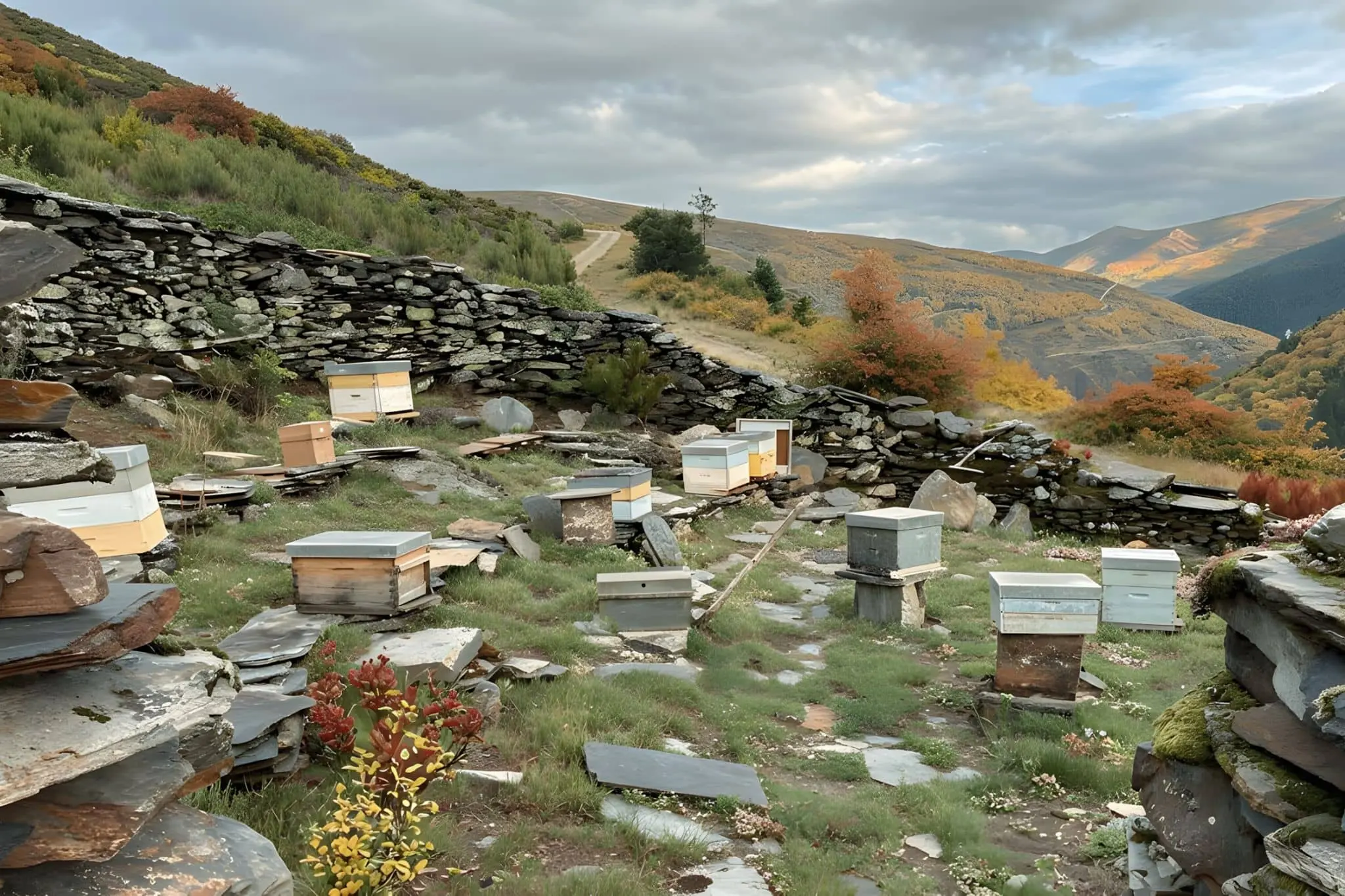
The honey arrives before the bees do, in the form of the alvarizas. These are the walls the route is quietly built around, and they are worth slowing for. An alvariza is a circular or oval stone enclosure, chest-high, built on the mountainside to hold beehives — not against weather, but against the bear. Galicia’s honey country sits on the old margins of the brown bear’s range, and for centuries a raided hive meant a winter’s sweetness and light gone in a night. So the beekeepers built rings of dry stone, adapted to the incline, oriented to the morning sun, and set the hives inside where the animal couldn’t reach. Most of the bears are gone now; the walls remain, which is the usual order of things here — the defence outlasting the threat, the architecture outliving its reason.
The descent to the Loureiro river is where the walk earns its middle grade. The path drops in earnest, and the vegetation changes with the altitude — pine gives way to ash, birch, the softer riverbank species — until you cross the water on a timber footbridge and climb the short, sharp zigzag on the far side. This is the one stretch to treat with respect: after wet weather a forty-metre section near the stream tightens with bramble and broom, and long trousers save the shins. It passes quickly.
What waits above is the souto de Paramedela, a chestnut grove now managed by the Xunta de Galicia, its trees numbered like a collection. At its heart stands a restored sequeiro — a two-storey stone drying house you can walk into. The logic is simple and total: chestnuts spread on slatted boards upstairs, a fire smouldering below for twenty days and nights, the smoke curing the harvest so it would keep the winter through. Before the potato reached these hills the chestnut was the staple, not the seasonal treat, and the sequeiro is the machine that made a mountain economy survive its own climate. It is the honest centre of the walk — not scenic, exactly, but load-bearing.
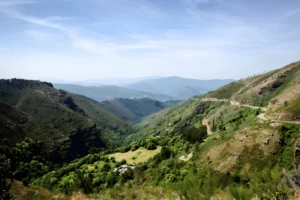
The climb back to Salcedo is the route’s reward, threading the mid-slope on an old cart road worn into the schist, chestnut and oak closing overhead. The two miradoiros — Pena dos Pasos the finer of them — open onto the Lor and Loureiro valleys and, on a clear day, the snowline of the O Courel peaks beyond. Near the top, a short marked detour reaches the castro de As Laceiras, an Iron Age hillfort held to be the best-preserved in the municipality, its ramparts still legible in the turf — a reminder that people were reading this slope for what it could give long before anyone drew a trail on it.
A word on timing. Wildfire has passed through this corner in recent years, and for a season the walk was genuinely bleak — bare track, lost hives, little reason to come. It has since come back, green and shaded, the way this land tends to. Go in autumn if you can, when the souto turns and the ground is loud with fallen chestnuts; carry water, because much of the exposed upper track offers no shade; and if you want the walk to make full sense, end it at the counter of a village bar in Salcedo, where the two things the route is named for still turn up on the same table.