By the end of October, 2,910 pilgrims had registered at the Pilgrim’s Office in Santiago after walking the Winter Way, already more than in the whole of 2025. In the same ten months the office counted 559,076 pilgrims across every route. The Winter Way is half of one percent of the Camino.
The real figure is probably higher. The last stages run on the Sanabrés, and Manuel López Eiriz, of the Asociación Camiños a Santiago pola Ribeira Sacra, says some walkers who came the whole way over the winter road are logged in Santiago as Sanabrés pilgrims instead. Nobody knows by how much.
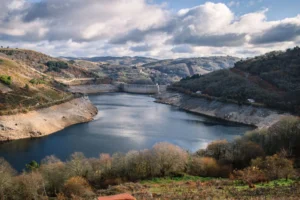
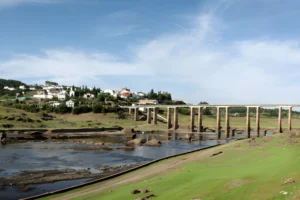
In Galicia, the route crosses 100 km of the Ribeira Sacra, from Albaredos in Quiroga to the chapel of the Faro above Chantada, with 3,078 metres of climbing. On foot that means four stages, from A Rúa to Rodeiro, of between 26 and 36.5 km each.
Who Walks It
Most of them are Spanish: 61%, against 38% across all routes. More of them give a religious reason for walking than the Camino average, 51% against 44%, by their own declaration at the office’s desk. This year’s growth came from abroad. Compared with the same period of 2025, foreign pilgrims rose by 31% and Spanish ones by 6%. Italy is now the second nationality after Spain. Manuel’s explanation is that people who come from abroad tend to be pilgrims in earnest, looking for a quieter road, and that some leave the Francés at Samos or Sarria once they see the crowds.
More than a third begin inside the Ribeira Sacra, at Monforte de Lemos or Chantada, and the number starting at Chantada roughly doubled this year. Manuel puts it down to the Compostela’s 100-kilometre minimum and to Monforte’s railway station. The majority still set out from Ponferrada, and that group grew by more than a fifth.
One Bed for the Stage
On the O Saviñao stage there is one place to sleep: the albergue at Diomondi, in the old episcopal palace beside the church of San Paio. It carries the name of Aida Sara Menéndez Lorenzo, who championed the Winter Way before it was official. It has 34 beds in shared dormitories and one separate room, takes no reservations and stays open all year. Carlos, one of its hospitaleros, has never registered more than 25 pilgrims on a single night. The evening we stopped in August, there was one.
Carlos says most arrive with little idea that they are in the Ribeira Sacra. They came for the road, not for the vineyards or the boats on the river, and unless someone stops to explain, they leave knowing about as much.
Signs Without Coffee
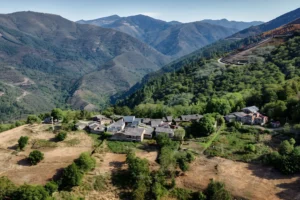
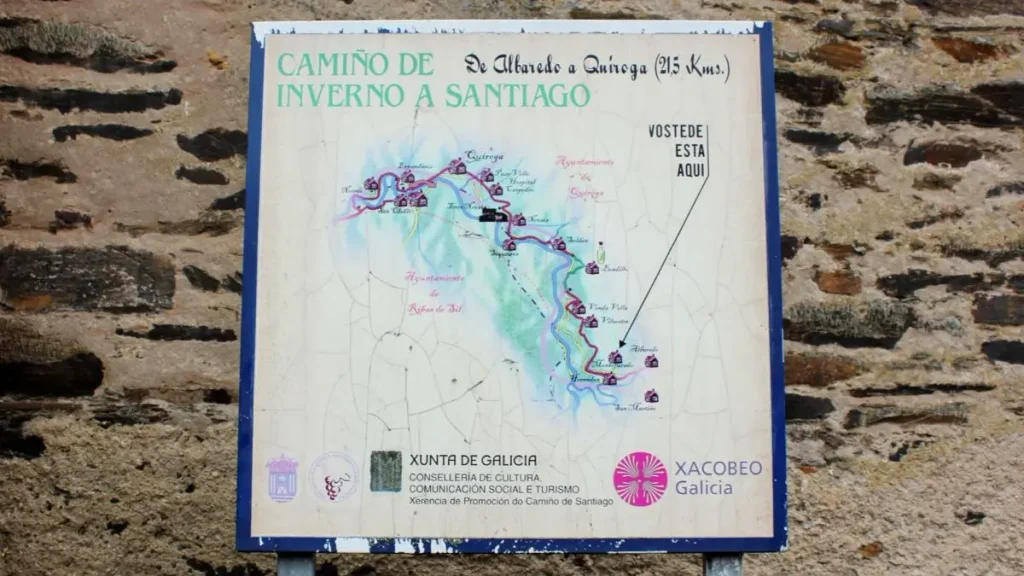
East of Monforte, at Montefurado, an illustrated panel maps the stage from Albaredos to Quiroga, 21.5 kilometres, village by village. It is a small work of art, the only one of its kind we came across. It stands in a village with no bar and no bed. Four pilgrims began their walk there in 2025, and none so far this year.
Between A Rúa and Quiroga there is nowhere to buy a coffee. Manuel describes it as chicken and egg: walkers don’t stop where there is nothing, and nobody opens anything for walkers who don’t stop. In his reading, the Xunta is reluctant to build albergues because it does not want to compete with private business.
Ten Years After the Work
Camiños a Santiago pola Ribeira Sacra has campaigned for the route since 1998. Recognition came in April 2016, with the Lei do Patrimonio Cultural de Galicia. The municipalities along the Winter Way banded together in 2018, ahora que está todo hecho, now that everything is done, as Manuel puts it. His association had placed a plaque at A Ponte, on the way into Chantada, to mark the recognition. It disappeared when official waymarking replaced their signs, and nobody could tell them where it ended up.
To Manuel, the Camiño de Inverno is a snowball, slow to start and heavier every year. It turns ten this autumn with a DO Ribeira Sacra wine from Vilachá named after it; between A Rúa and Quiroga, there is still nowhere to buy a coffee.
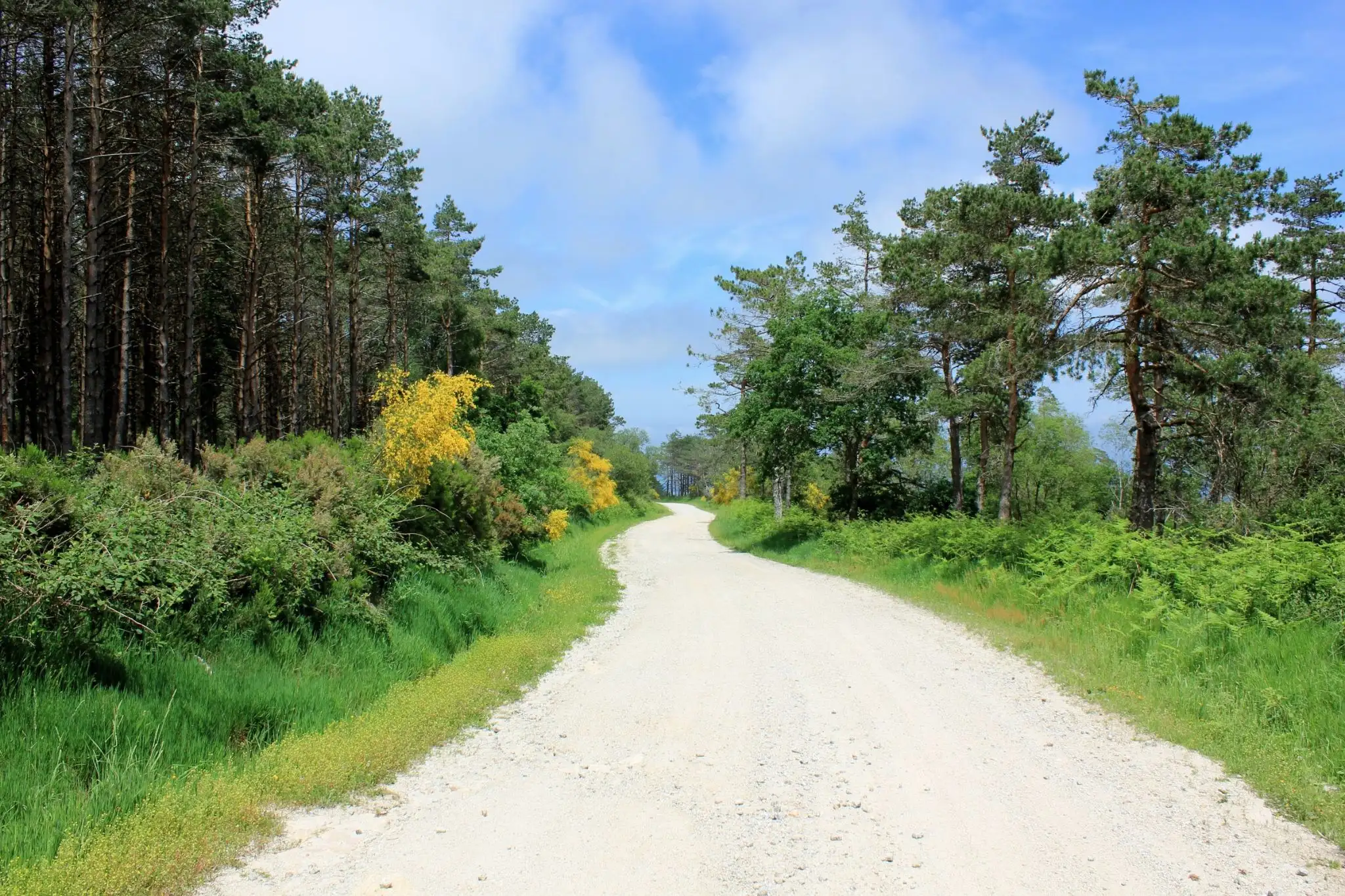
The Winter Way on the climb to Monte Faro; An illustrated map at Montefurado, Quiroga — photos by P. Vanossi.