There are four bakeries in Ribeira Sacra we drive to, and the ratings had nothing to do with choosing them. Each makes bread we keep going back for, each for a different reason. What they share is how little they do to get you through the door: no window display, nowhere to sit, nothing that would make a passer-by stop. One customer described Rufina’s decor as spartan and added, in the same breath, that people never stop coming in. You find places like these because someone tells you about them. This is us telling you.
The austerity has a practical side. By late morning a counter can be down to a few loaves, and empanadas and pure rye are often made to order. Go in the morning, and if you want something specific, order the day before. That is what the phone numbers below are for.
Panadería Carlos, Taboada
Our first stop, and the bread we measure the others against. Carlos bakes in a wood-fired oven in San Martiño, a few kilometres up the road to Monterroso, with almost no yeast and no story to go with it; we told the rest in his portrait. Buy the bread, and order the beef empanada. The shop is on Avenida de Lugo in Taboada.
Panadería Carlos · Avenida de Lugo 61, Taboada · 982 46 50 31 · [Map]
Panadería Escairón, O Saviñao
Nené is the son and grandson of bakers, and the most technical of the four. He has always worked with masa madre, which used to be called levedo, with a little yeast to help it along, and he reads up and changes things when he learns something new. He makes wheat, wholemeal, the local trigo país and a 100% rye, which he says very few bakers still make. On Saturdays he bakes a sourdough loaf with no yeast at all, for his friends.
He also gave us the clearest explanation we have of what “wood-fired” means. He keeps two ovens. In the first, the fire burns inside the chamber where the bread bakes, and that is what gives the crust its toasted, smoky edge, “like a roast”. In the second, the fire heats the chamber from outside, and then it makes no difference whether it burns wood, pellets or diesel. A sign saying horno de leña does not tell you which kind you are getting. He feeds the first with birch and pine; oak gives too much heat for an oven fired several times a night.
The empanada to try is torreznos with chorizo, made with Iberian pork belly. “This isn’t bacon,” he says. His sister makes a light cream bica. In Monforte, Restaurante Edulis serves his bread.
Panadería Escairón · Rúa Pardo Bazán 33, Escairón · 982 45 23 42 · [Map]
Panadería Rufina, Monforte de Lemos
Rufina was our baker when we lived in Monforte, and it is the closest of the four to Carlos in spirit: old-style bread, denser and heavier on the stomach than his. It makes rye too. The everyday loaf is a blend, so order ahead if you want it pure. The empanada is what regulars praise most. In the mornings, students from the nearby IES Francisco Daviña Rey come in for croissants, which are very good and always fresh. Regulars can also have bread delivered every day, Sundays included.
Panadería Rufina · Rúa Doutor Casares 80, Monforte · 663 479 835 · [Map]
Panadería Sios, Pantón
Sios bakes in a wood-fired oven in Fontepedre, five minutes’ drive from Ferreira de Pantón. The bread is de toda la vida, in barras and round loaves, large and small. A kilo loaf here still weighs a kilo once it is baked, as one customer points out, and it makes good toast even when it has gone stale. It travels, too: you’ll find it as far away as the Eroski in Vigo, and closer to home Guardabosques serves it in Donelle.
Panadería Sios · Fontepedre, Siós (Pantón) · 982 18 20 65 · [Map]
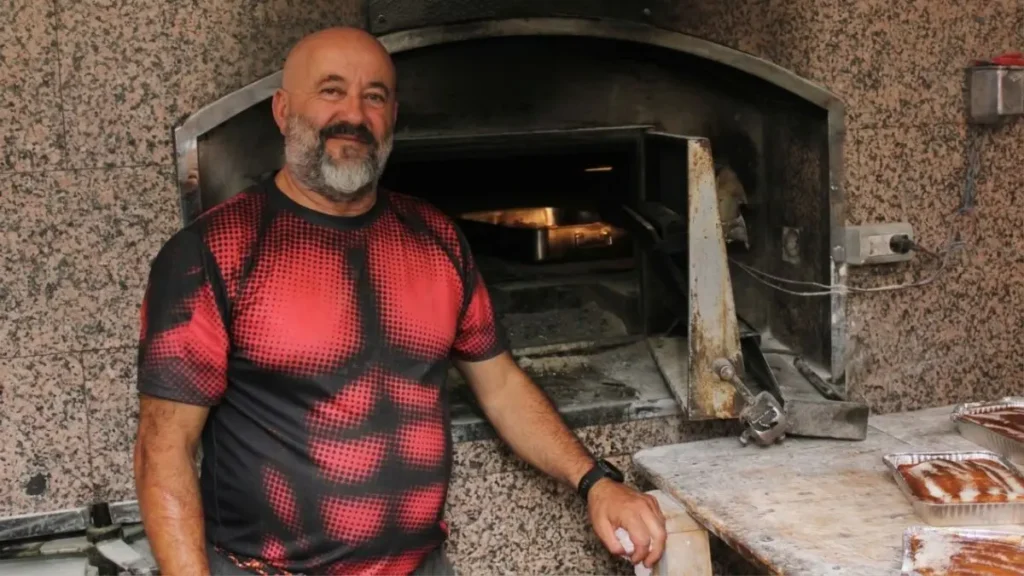
Proofing boards and cloths; Nené at his wood-fired oven — Panadería Escairón — photos by P. Vanossi.