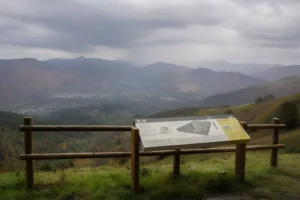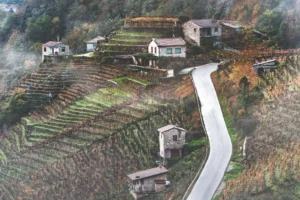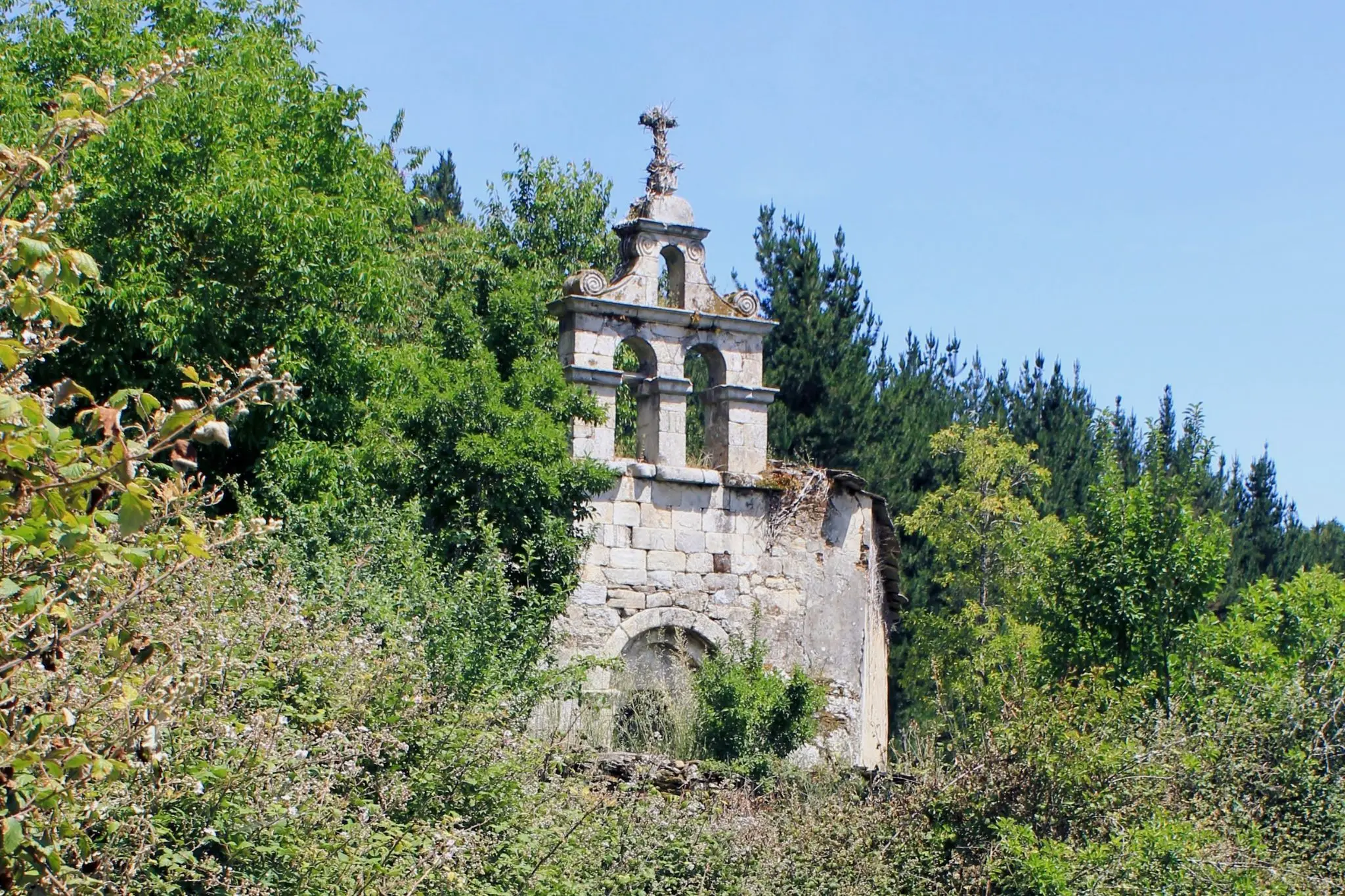
On 9 June 2026, ICOMOS — the advisory body that vets cultural nominations before the World Heritage Committee meets — published its verdict on the Ribeira Sacra Waterscape. It recommended against inscription. Not “defer,” not “refer back for minor revisions”: the conditions of integrity and authenticity were judged unmet, and the single criterion the bid rested on was found undemonstrated. The final decision still belongs to twenty-one countries gathering in Busan from 19 July, and an advisory recommendation is not a sentence. But the report is worth reading closely, because its objections are not bureaucratic obstruction. They are, more or less, correct — and they point at a stronger case the dossier never quite assembled.
What ICOMOS Actually Said
The nomination was filed under criterion (v): an outstanding example of a traditional human settlement and land-use, representative of a culture and especially vulnerable under the pressures of change. ICOMOS concluded the comparative analysis did not justify the property’s consideration at all, and that criterion (v) was not demonstrated. Everything else followed from that single failure. If the value cannot be shown, its attributes cannot be identified, and integrity and authenticity have nothing to attach to.
The reasoning is unsentimental. This kind of terraced, hydraulic, vernacular landscape, ICOMOS noted, is “not altogether uncommon within the European region.” The dossier presented hundreds of attributes — terraces, water mills, settlements, hydraulic works, monasteries — across a wide span of time and type, but “a wide diversity of attributes is not necessarily a determinant of Outstanding Universal Value.” It was not evident how they fit together. The “Waterscape” framing, the body added, was an interesting idea for promotion and visitors, but it did not explain what was distinctive about the place. And the proposal that twentieth-century dams and hydroelectric stations represented an organic continuation of centuries of water mills was simply not accepted.
That last point stings because it was the bid’s boldest move, and it was the wrong one.
The Douro Problem
Compare the case that worked. The Alto Douro Wine Region, inscribed in 2001 on three criteria, did not need a unifying concept invented for the occasion. Its value is a continuously cultivated wine landscape, shaped by human hands over two millennia, still producing — the evolution of a single human activity legible in the terrain itself. The argument is narrow, old, and alive. There is nothing to assemble; the vineyards do the explaining.
Ribeira Sacra’s bid wandered by comparison. The 2021 nomination was withdrawn and rebuilt from a different justification, different criteria, different boundaries — the new version arriving under the “Waterscape” banner. Shifting the central claim between submissions is itself a signal to an advisory body: it reads as searching for an angle rather than having found the irreducible one. And the angle chosen put Ribeira Sacra into direct comparison with a crowded European field — Cinque Terre, Wachau, Lavaux, the Upper Middle Rhine, Douro itself — all steep, all terraced, all already on the list. Cinque Terre is the uncomfortable mirror: inscribed in 1997, also under criterion (v), also terraced, also emptying of the people who built it. The question a committee asks is not “is this beautiful” but “is this distinct from what we have already protected.” On water and on terraces, the honest answer was no.
The Two Failures
Strip the report down and two problems remain, and they are not the same problem.
The first is narrative. The dossier had the raw material for a coherent story and presented an inventory instead. Read across this magazine’s own pages — the monastic system that organised the territory, the parish-Romanesque network denser here than anywhere in Europe, the slopes terraced not for scenery but for subsistence — and a causal spine is visible. It simply was never made load-bearing.
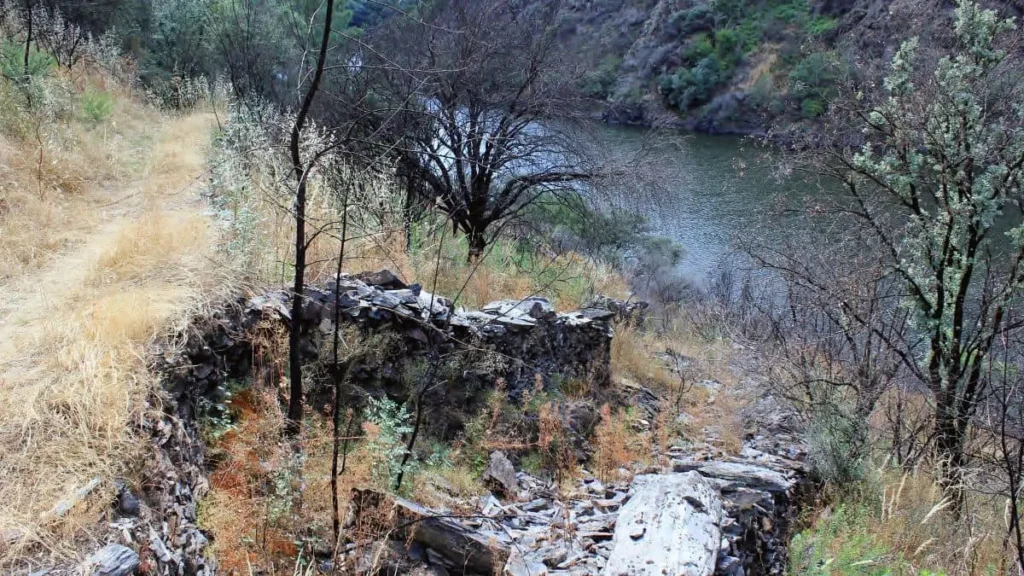
The second is harder, and no amount of rewriting fixes it. ICOMOS observed, almost in passing, that past population decline has already cost the landscape some of its attributes: terraces lost, water mills obsolete and surviving only for interpretation. This is the difference between Douro and here, and it is structural, not editorial. Douro’s value is anchored to a living, scaled economy. Ribeira Sacra’s is anchored to the artifacts of a contracting one. A landscape whose worth depends on work still being done is a fragile thing to inscribe when the workers are leaving. The depopulation this magazine has documented, and the wildfires that read abandonment back to us as a map of where the work has stopped, are not background risks to this candidacy. They are the candidacy’s central vulnerability, filed in the dossier as a footnote when they belonged at the centre.
There was also, the report records, a formal objection from the Federación de Asociacións da Ribeira Sacra — local organisations citing precarious living conditions, conflict with wine growers, water quality, and unease about a designation built for promotion. A heritage status is hard to defend as living when the living are ambivalent about it.
The Case That Should Have Been Made
So here is the sentence the dossier never wrote, offered not as a critique but as a wager on what this territory actually is:
Ribeira Sacra is the cultural landscape where a millennium-long monastic land-management system shaped a river canyon into its present terraced, forested, hydraulic form — and where that system’s last living practitioners are the only thing standing between heritage and ruin.
Every element ICOMOS found scattered becomes consequence rather than inventory: the terraces, the mills, the parish churches, even the later dams as a final stratum of the same impulse to organise water and slope. Monasticism stops being one item in a list and becomes the mechanism that made the rest. And the demographic crisis stops being a risk to be managed in an annexe and becomes part of what is being recognised — a landscape caught at the threshold between living system and relict, where inscription is frankly a bet on which side it lands.
That is a harder case to file. Institutions do not love centring “we may lose this” as the argument for protection, even though precisely that argument has won inscription for endangered living heritage elsewhere. Whether Spain reframes in time for Busan, or accepts a referral and returns with a third nomination, the test is the same one ICOMOS set: not whether the place is remarkable — everyone agrees it is — but whether anyone can say, in one unbroken line, why it could not be anywhere else.
The terraces will hold that answer or they won’t. They are, either way, still being walked away from.
Update — 27 July 2026
Busan referred the nomination back. Not inscribed, not rejected: a referral, carried by a fifteen-country bloc led by Peru against Switzerland and Czechia, who pressed for the harsher deferral that would have meant rebuilding the dossier from scratch. The file stays alive, and Spain has three years to resubmit.
The condition attached matters more than the verdict. Spain must formally request an ICOMOS advisory mission on the ground — several delegations said plainly that they expected the dossier to return unchanged otherwise. The work assigned is documentary: inventory and cartography of the hydraulic heritage, and of the vernacular and intangible elements tied to water culture.
Read the list for what it omits. Nothing about depopulation, nothing about who manages the terraces. Spain has been asked to document the landscape more completely. Nobody has asked it to explain what built the landscape, or who is left to keep it.
Church of Santiago de Ribas de Miño near Portomarín — photo by P. Vanossi.
Abandoned terrace wall along the Sil, near Castro de Abaixo — photo by P. Vanossi.