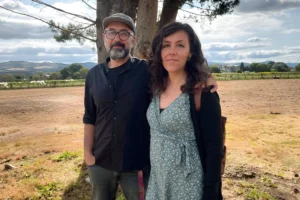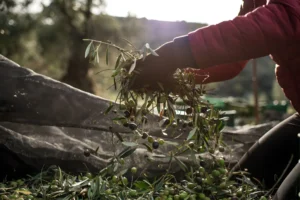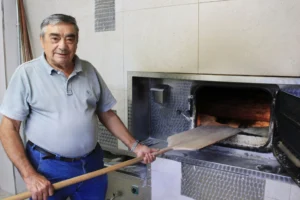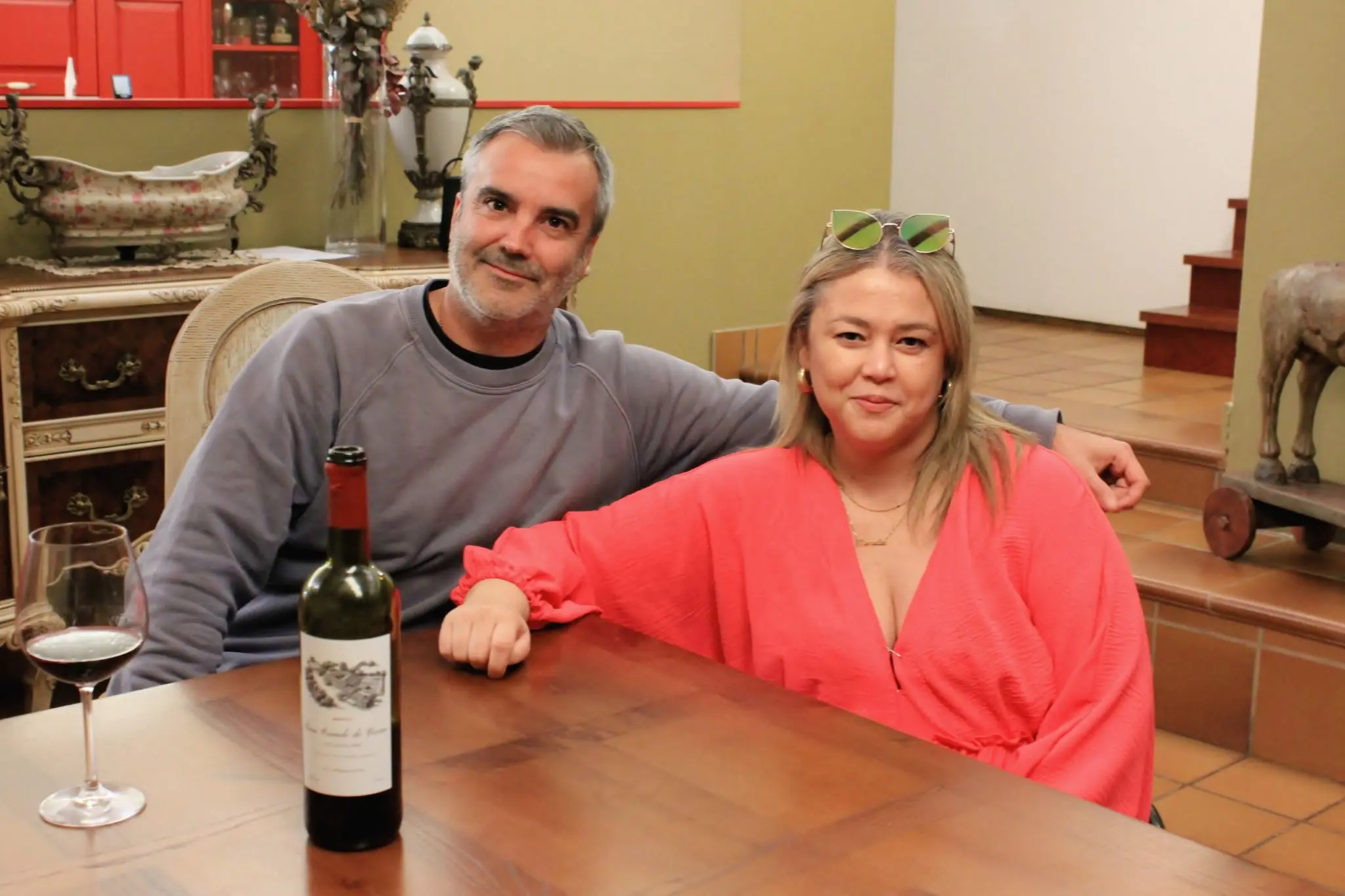
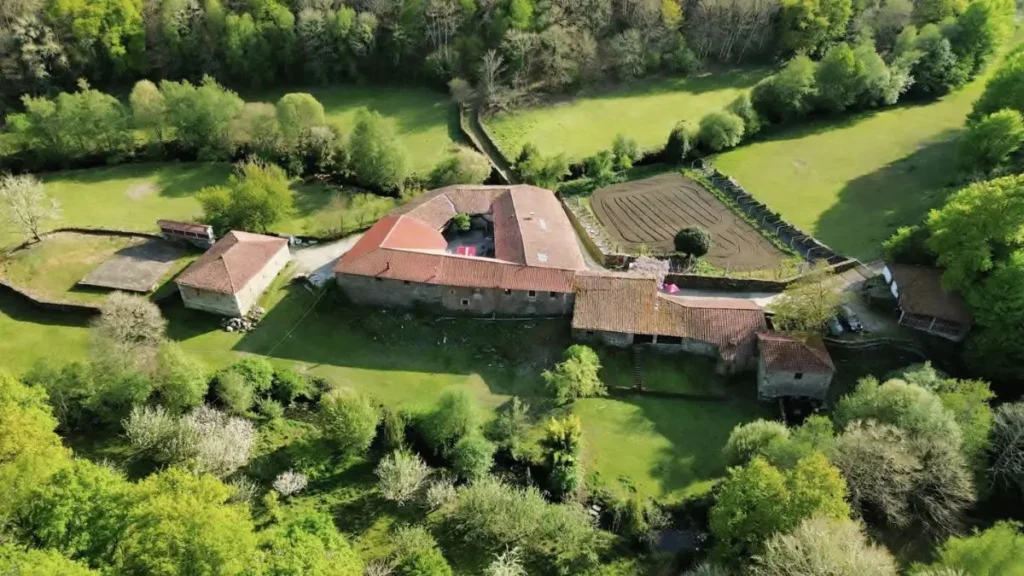
Covas is an aldea in the parish of Castelo, in Taboada (Lugo), with five registered residents, all of them one family: Juan Mora, Mercedes Zepeda and their three children. Around the manor house are a hórreo, a bodega, a chapel with a Baroque altarpiece from around 1700 and a pair of mills, inside a fenced estate of around 80 hectares. The Rego de Moreda runs through it, down to the Miño. There are seven tourist apartments now, with cabins by the river to come. The couple came from Mexico by chance and run nearly all of it themselves: the vines, the hives, the orchard, the walking trails, the breakfasts. It’s an ambitious project, and each time we visit, their determination is what stays with us. In their telling, Covas was once a retreat for monks from Oseira, a small world of its own. The couple run it on the same principle of independence.
Q. Who were you before Covas?
Mercedes: Juan was in construction; I was in fashion. I had a showroom at home and put outfits together for clients. Whoever came in became my friend. When we got here I thought: who am I going to talk to? Juan told me to wait, that once we had guests I’d have that again. He was right. Now we have friends everywhere.
Q. How does a family in Mexico end up in Taboada?
Juan: Through family friends, Galicians who have lived in Mallorca since I was small and have a house near Lugo. More than four years ago they came with my parents to look for a second property, something small to restore for the summers. The agent showing them around suggested they also see this one. They weren’t even looking for something like it, and by chance everything else followed.
Mercedes: It was Juan’s parents’ idea. They saw it and said: this is a project, and a way for Juan to come back to Spain with his family. Our eldest was getting close to university, the children were growing, and we wanted to be near family. We thought we were going to Mallorca.
Juan: When I saw it, I said: an opportunity like this doesn’t come along easily. I didn’t hesitate.
Q. What was Covas before you?
Juan: They say monks from Oseira came here to retire, and ended their lives here. The story goes that they laid out the bodega and the orchard, the orientation, and that’s why the wine comes out so well. It was a small aldea, a place people passed through. It had its chapel, its bodega, the mills. People brought their grain here on their animals to grind, and baked their bread.
Mercedes: We tell guests that’s why you sleep with so much peace here: because of what the monks left.
Q. Your vineyard looks across the reservoir to Castro Candaz, and you make the wine yourself.
Juan: It’s my third year, and I’m learning. The mencía ferments with its skins; that’s where the body comes from. This year we picked about 560 kilos of red and 200 of white. It’s enough for us, for gifts and for guests. People around here say this bodega always made very good wine. The old vineyards were down by the Miño, and went under with the reservoirs.
Q. What do guests do here?
Mercedes: We take them to the vineyard; some people have never seen a vine up close. Then the bodega, and a tasting here. The apiary, the orchard. Short walks of an hour or so: the river, the bridge, the waterfalls, the water channel down to the Roman fountain. Many guests only speak English, and nothing here is in English, so we go with them to ferias and restaurants. They tell us they’d never have known what to order.
Q. Why do almost everything yourselves?
Mercedes: We like it. We look after guests from the moment they arrive until they leave. If you offer food, it has to be spotless, beautiful and good.
Juan: What it has taken most is patience. We’d like to go faster with everything.
It’s a project for the present and the future, for us and our children. And a way of life.
Q. You keep building: events, cabins, a sauna by the river. What are you building for?
Mercedes: The first thing we all said, his parents, us, everyone, was that the Ribeira Sacra was on the rise and people still didn’t know it. Guests tell us they’d never heard of it.
Juan: Everything that’s missing here is what we want to offer. It will never be Mallorca, because it’s protected and there isn’t room for that many people. When people discover it, there will be much more demand and little supply. So we’re going for exclusivity.
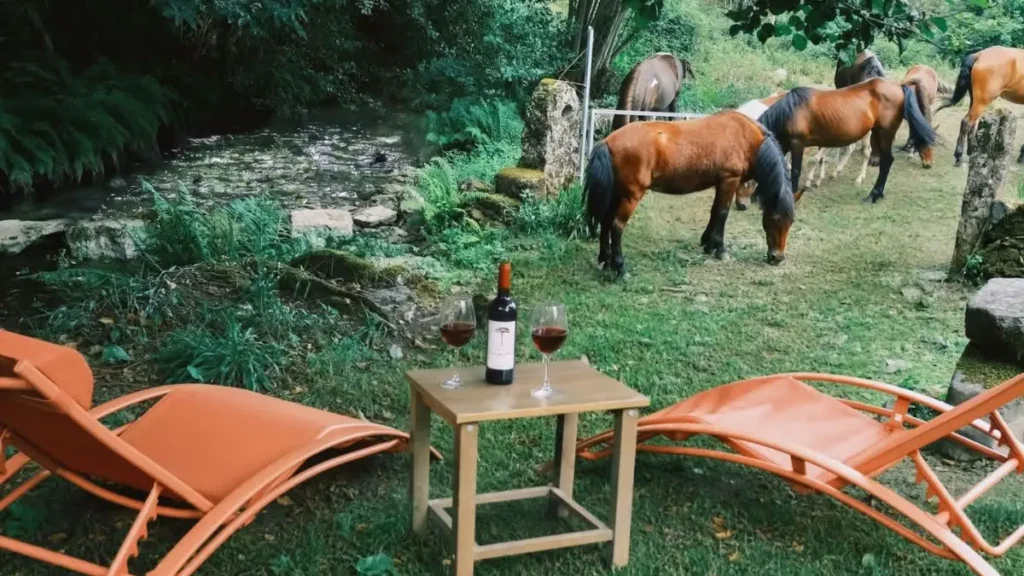
Mercedes: By May next year the events space should be ready: weddings, company events, communions. The orchard is being redesigned, inspired by Versailles, with a fountain made from the old millstones. People from around here ask us for it too: Friday concerts, a jazz night, a glass of wine with the horses going past.
Q. This has been your second full season, and you’re open all year. How has it gone?
Mercedes: Much better than we expected. We’ve had guests from England, Mauritius, Germany, France, and above all from Spain: the Basque Country, Madrid, Barcelona, Seville. We already have bookings for next year. Someone booked for March today.
Juan: People are afraid of Galicia in winter, because it rains and it’s cold. What we want to tell them is: come in winter, but come to Covas. It can rain outside; inside you’re at 21 degrees, with the best internet, your wine, Galician products. We’re doing a video for digital nomads, so people come for two or three months and work from here.
Q. What keeps you going?
Juan: When a booking comes in, or the weekend is full, and people tell you “what a project, I want to come back”, that gives you strength. They arrive as guests and leave as friends. This summer a mother and daughter told us they’d travelled the world and had never been treated like this. They said they felt better here than at home.
Fire Round
A place
Juan: Praia da Cova. “We’re Mediterranean, from Mallorca. I’d never seen a river beach.” Mercedes: Chantada. “On a weekend night there’s always something going on.”
A dish and a wine
Pulpo, and our own wine.
A word
Magical.
A misconception
That it’s lonely, a place only for summer. Nobody believes how much quality of life you have here.
All photos courtesy of Casa Grande de Covas. Not for reproduction without written permission.