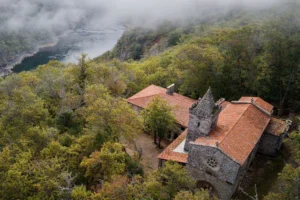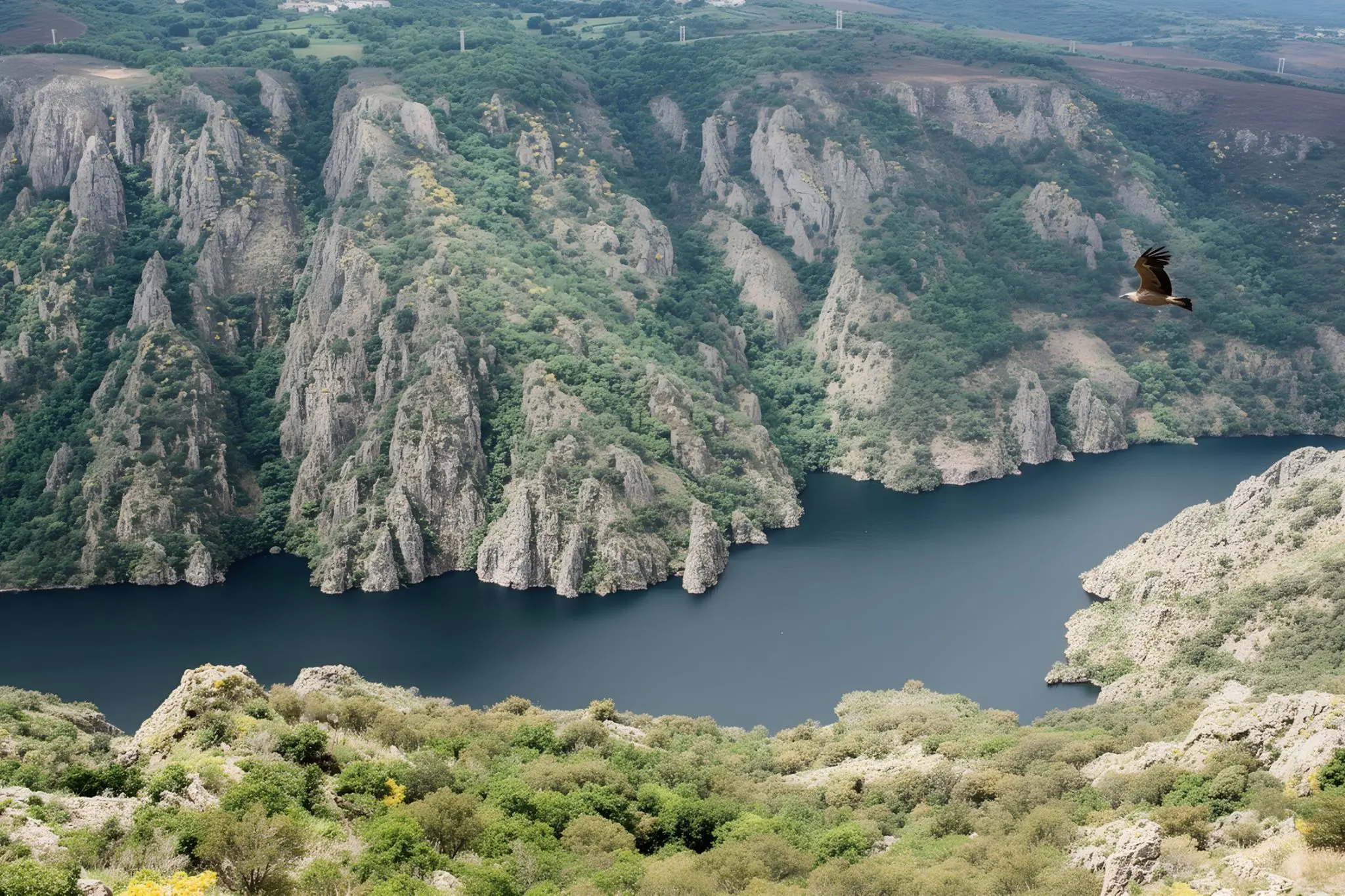
A short-toed eagle hangs almost motionless over the Sil, head angled down, hunting the warm air that rises off the schist. It can hold that position for minutes, doing nothing a camera would register as motion, and then drop. Below it: a Romanesque church, a vineyard pruned that morning, a road that takes forty minutes to cover ten kilometres. The eagle is the reason to look up, but it is rarely the only thing in the frame, and that — not the species list — is what makes this a particular kind of birding.
It is not the kind the guidebooks rank first. Galicia’s birding reputation is a coastal one — the seabird migration off Estaca de Bares is among the great spectacles in Europe, and almost everything written about watching birds in the region faces the sea. The inland register is quieter and split between two registers of its own: the high sierras (Os Ancares, O Courel, the Macizo Central) for mountain raptors, and the river canyons for the cliff species that need sheer rock and deep air. Ribeira Sacra is the canyon. Within Galicia, the gorge habitat — peregrine and eagle owl on vertical schist, crag martins working a trench four hundred metres deep — is genuinely scarce, and this is one of the few places to find it concentrated. Not the best birding in Spain, then, and not even the headline of birding in Galicia. But for what it is — cliff and canyon, inland, away from the coast that defines everything else — it has few rivals in the region.
Fragmentation as Habitat
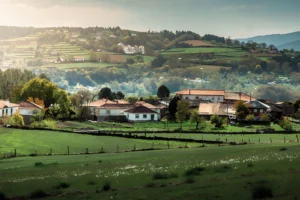
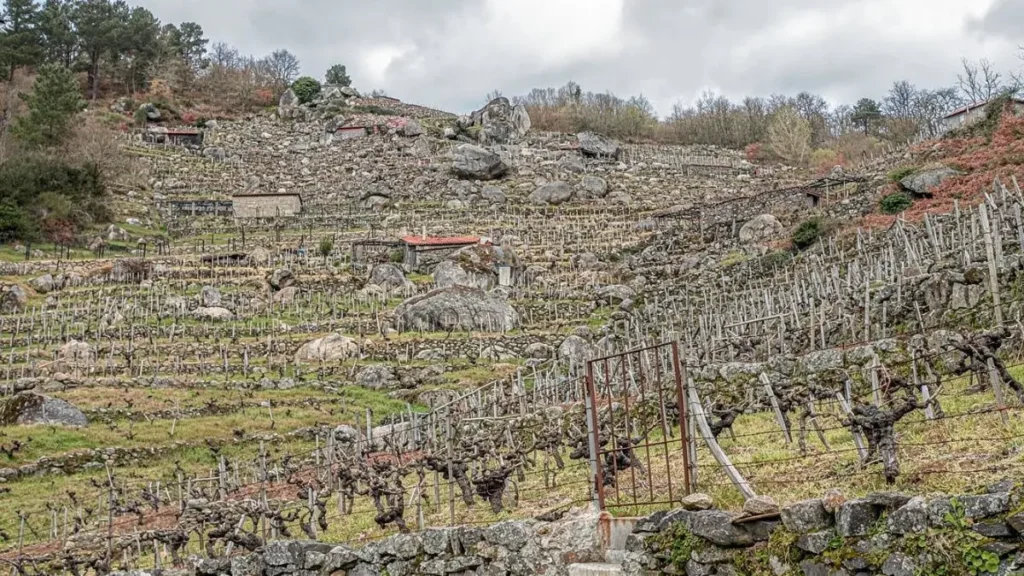
The diversity has a cause, and the cause is not wilderness. Ribeira Sacra is one of the most worked landscapes in Galicia — terraced, grazed, coppiced and abandoned in turn for fifteen centuries. What looks like nature is the residue of agriculture that advanced and retreated unevenly across an impossible topography. The same geometry that made monastic withdrawal viable — sheer schist walls, a river too deep in its trench to flood the slopes, distances measured in gradient rather than kilometres — turns out to be precisely the geometry a cliff-nesting raptor requires.
The canyon supplies the vertical rock that peregrine, eagle owl and golden eagle need for nesting and the thermals they need for hunting. The chestnut soutos, some of them centuries old, hold the cavities and insect life that woodland species depend on. The vineyard terraces and the half-returned scrub between abandoned plots create the open-edge mosaic — neither forest nor field — where the most species concentrate. Low human density does the rest. Fragmentation, the condition that is slowly emptying these parishes of people, is the same condition that fills the air above them.
What Flies Here
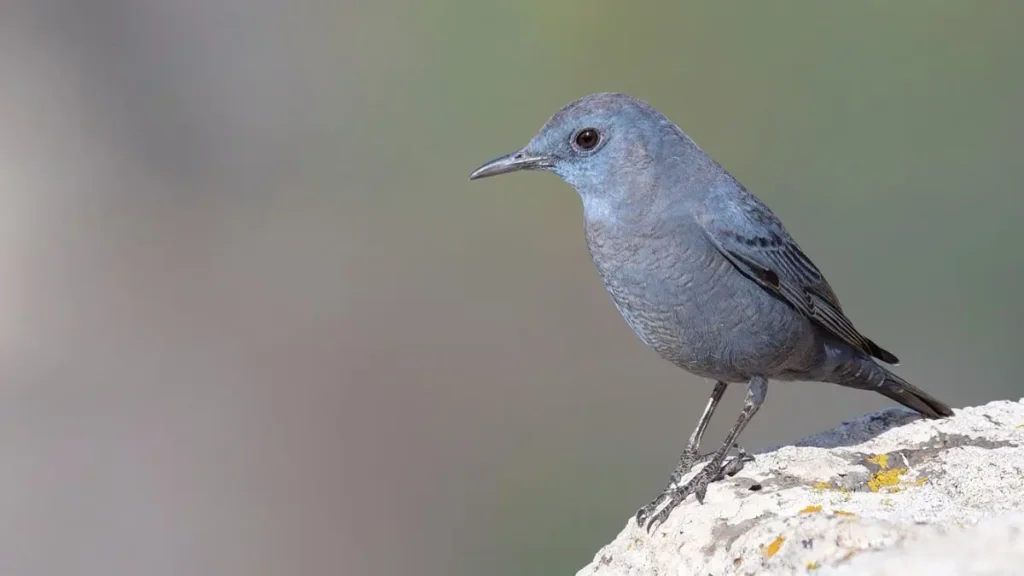
The official Birding in Galicia programme catalogues three sectors inside the territory, and the species list is genuinely good for the latitude. The Canón do río Sil holds the headline raptors: golden eagle, short-toed eagle, the goshawk that works the wood edges, the honey buzzard that arrives to nest in summer. Peregrine and Eurasian eagle owl share the cliffs — one hunting by day, one by night, the same rock face working two shifts. Lower down, the blue rock thrush sings from exposed schist and the crag martin threads the gorge in fast, low arcs. This is the deepest, most dramatic of the sectors, and the one that rewards a slow morning at a single rim viewpoint over a circuit of them.
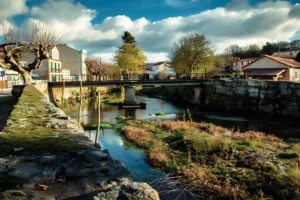
The second sector, Ribeira Sacra Norte, changes register without changing cast. The Miño here runs broader, slowed by Belesar, and the gorge opens into a mosaic — vineyard, chestnut wood, scrubby farmland, slack water. The same raptors work it, black kite above all, booted and short-toed eagle over the slopes, but the drama is turned down in favour of variety: woodland birds in the Diomondi oaks, swallows and martins stacked over the Belesar bridge in a single glance, heron and cormorant on the reservoir for anyone who finds the word raptor more commitment than pleasure. This is the gentler way into the territory’s birds, and it stays north of the postcard, on the quiet Portomarín side. (The third sector, the Vales dos ríos Bibei e Navea, sits east toward Quiroga, drier and higher — the territory’s edge, and a register of its own.)
Layered, Not Specialised
The distinctive thing is not the list. It is that nothing here asks to be watched in isolation. Extremadura birding is built around the hide and the reserve: you go to the place, you watch, you leave. Ribeira Sacra has no hides worth the name, and that absence is the point. The short-toed eagle hangs over a Romanesque parish church whose key still lives in the neighbouring house. The peregrine stoops past a viewpoint built for the wine. The eagle owl calls across a valley where someone is, at that hour, pruning vines that a monastery laid out eight hundred years ago. Birds are folded into the wine, the stone and the forest rather than separated from them — which means the visitor who came for one of those things will find the others arriving uninvited, from above.
It is the wrong territory for a superlative, and the right one for a structural claim: this is birding without specialisation, available to the curious rather than reserved for the equipped. You do not need a four-thousand-euro lens to stand at a Sil viewpoint at the right hour and watch a raptor use the canyon the way it was, geologically, built to be used.
The Right Hour, the Right Edge
Timing decides almost everything. Raptors ride thermals, and thermals build through the morning and collapse toward dusk; mid-morning to early afternoon on a clear, still day is when the cliffs work. Spring brings the migrants — honey buzzard, short-toed eagle — and the territory’s resident pairs into their loudest, most visible weeks. Winter strips the soutos and concentrates the waterbirds on the reservoirs. The viewpoints engineered for the wine landscape double, without anyone intending it, as raptor platforms: the rim above the Sil, the balconies that face the deepest reaches of the trench, the terraces that look across the widened Miño.
Bring binoculars rather than ambition. A pair of 8x42s, a clear morning, and the patience to let the canyon do the explaining will show you more than a guided dash between sites. The roads here are slow by design and worse by neglect; an afternoon covers less ground than the map suggests and rewards you for not trying. And carry the territory’s other registers lightly in mind — the church you can enter, the bodega that pours at the right hour, the chestnut wood turning in October — because the bird you came to see will almost always appear when you have, for a moment, stopped looking for it.
Dormant terraced vineyards with schist boulders, Ribeira Sacra — photo by M. D. Paderne Sanchez, edited with AI.
The blue rock thrush — the canyon’s most reliably present singer — photo by A. Voikhansky, edited with AI.