~20 km drive · 3 stops · ~2.5 hours · Start: Portomarín · End: Mosteiro (Taboada)
The catamarans run on the Sil, and so do the photographs. Almost everyone who comes to watch raptors in Ribeira Sacra ends up on the south rim of that gorge, lens trained on the same stretch of vertical rock. This route does the opposite. It follows the right bank of the Miño north of the Belesar reservoir, through a landscape the official maps file under Ribeira Sacra Norte — a sector that shares the same cast of birds as the Sil canyon but stages them on a gentler, wider, far less crowded set.
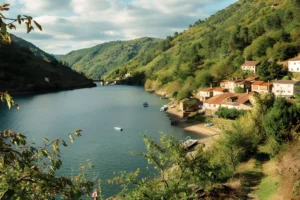
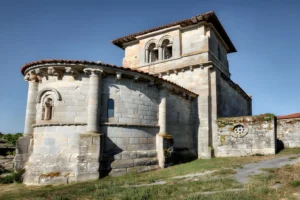
You start in Portomarín, a town with a strange biography: when the Belesar dam flooded the old riverside settlement in the early 1960s, the fortress-church of San Xoán — also called San Nicolás — was dismantled and rebuilt, stone by numbered stone, on the hill above the new town. Look closely at the masonry and you can still read the figures painted on each block. The Knights of St John built it as church and stronghold in one, guarding the bridge and the pilgrims of the Camiño Francés, which still threads through here; the Maestro Mateo workshop left its signature on the west portal. That history is the warm-up, not the headline. Walk out to the water’s edge below the new town and the river opens wide and slow. Cormorants work the reservoir surface, grebes dive in the slack water, and on the thermals above the right-bank slopes the first black kites and booted eagles start to circle by mid-morning.
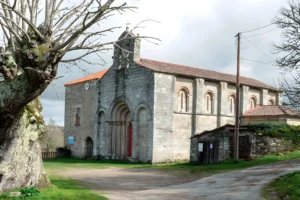
From Portomarín the road follows the right bank south through the parish of Sabadelle, past the small parish church of San Salvador, and on toward the lugar of Xián. This is raptor ground. The slopes here are a patchwork of vineyard, abandoned terrace, chestnut and scrub — the kind of broken mosaic that abandonment produces and birds of prey exploit, hunting the edges where one land use gives way to another. The road itself is the hide: pull over at a wide bend, kill the engine, and watch the slope opposite. By Sabadelle the black kites are usually already up, and the open ground past Xián is where the list lengthens — Montagu’s harrier quartering low over the fields in summer, short-toed eagle hanging on the updraughts, red-backed shrike on the fence wires, woodlark singing from the rough ground.
None of it is rare enough to draw the equipped specialists with their telescopes and their target lists — which is precisely the point. This is birding available to the merely curious, the kind you do with binoculars and patience rather than a permit and a hide. The stops are wherever the slope and the light suggest one; there is no signposted observation point on this stretch, and the route is better for it.
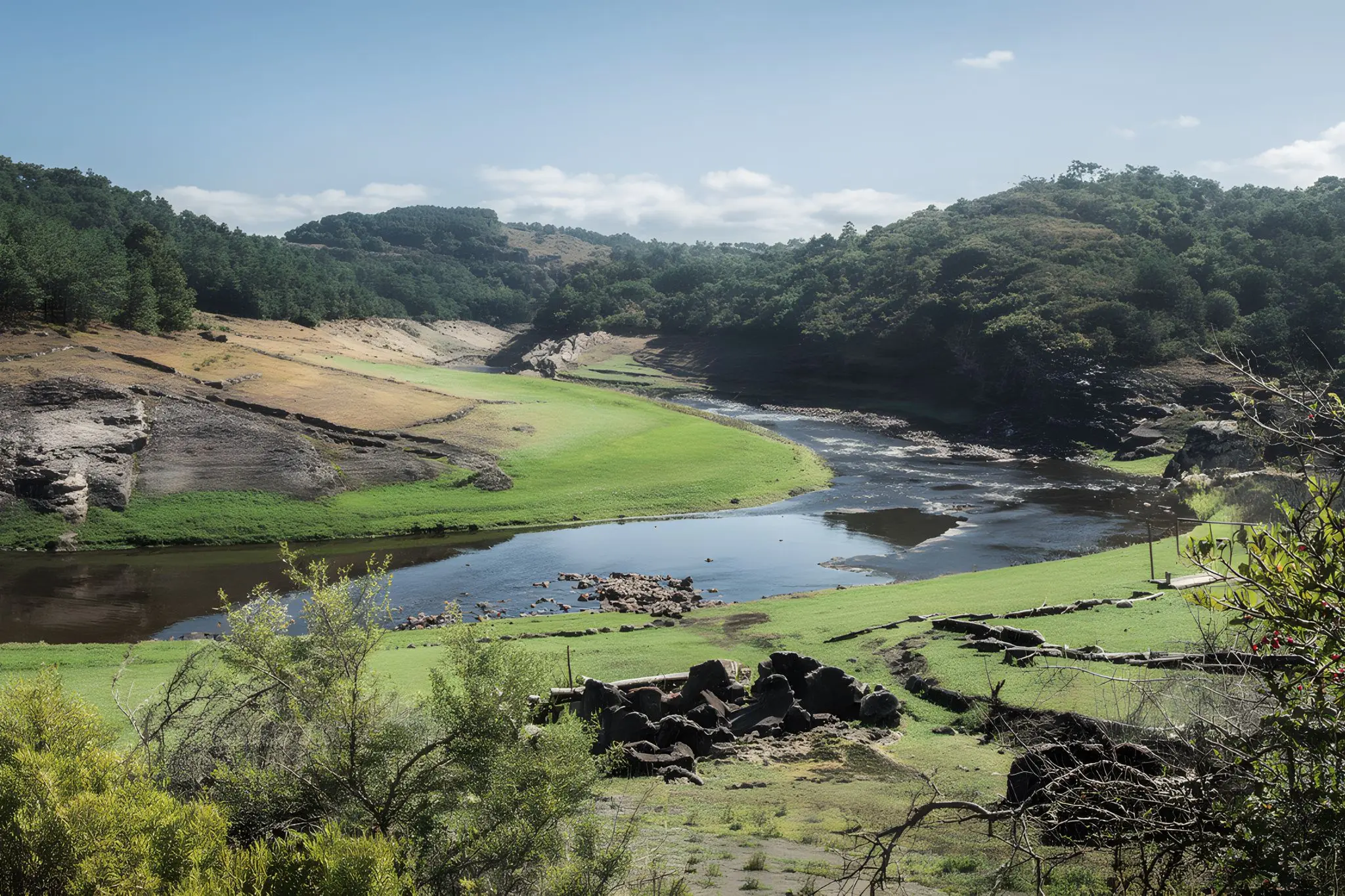
The route’s argument arrives at the end. The Miradoiro da Tragariza, in the concello of Taboada, sits about 260 metres’ walk in from where you leave the car — a short, level path to a point where the Miño throws a wide meander and the terraced vineyard gives way abruptly to bare rock. It looks, for a moment, like the Sil. The drama people drive hours south to find is here too, on the quiet bank, without the queue for the viewpoint or the boat. Peregrines nest on this kind of rock face; watch the cliff line and you may catch one stooping. It is the clearest demonstration the north bank can offer that it was never the lesser sector — only the less photographed one.
Drive it in spring or early summer, when the migrants are in and the harriers are breeding, and aim for the window from mid-morning to early afternoon, when the thermals build and the raptors rise to use them; a clear, still day is worth far more here than an early start. The roads are narrow, paved and quiet, but they climb and twist, so this is a route to take slowly, on four wheels, with the short walk in at the end the only part done on foot. Bring binoculars, bring more patience than you think the day requires, and treat the bird list as an invitation rather than a checklist — the slope decides what shows up, not you.