The roads had been closed for forty years before anyone thought to open them again. Not closed by decree — closed the way things close in the Galician interior, by absence. The carts stopped running, the people who walked between villages died or left, and the scrub came down over the tracks that had once stitched one hamlet to the next. By the time Móvete por Nogueira set out to trace them, some of those paths existed only in the memory of people old enough to have used them.
The association was one woman’s idea before it was six people’s project. Esperanza — the president, the one who “sees a bit of what’s dead,” as Chelo Durán puts it — looked at Nogueira de Ramuín and saw a territory with real heritage and no pulse. She started it and still runs the social media, which is its own kind of fieldwork now that the brush-cutters have gone quiet. Around her came the others: Chelo, the treasurer, and Antonio, Miguel, Alfonso and Vicente. Six of them are the association. Four are the ones still out on the mountain on a Sunday, cutting. That is the whole organisation — and Chelo is insistent that without all of them, none of it would exist.
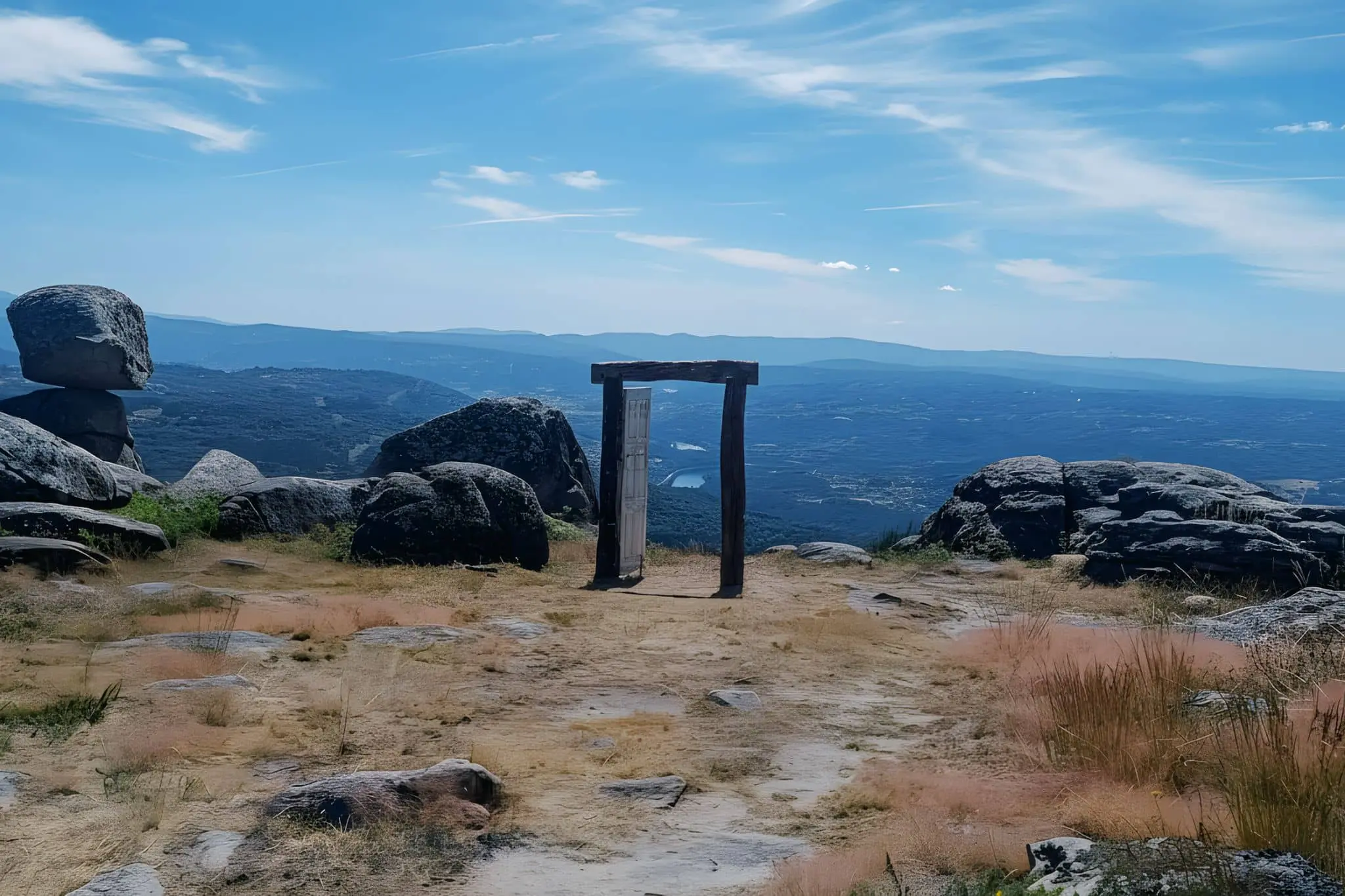
What they built, over roughly ten years, was three walking routes out of Baldomar, where the three paths converge: the Camiño da Amargura, the Camiño do Contrabando, and the Ruta do Farricoque. None of them is a stroll — sixteen to twenty-two kilometres each, with the kind of accumulated climb that separates people who walk from people who say they do. They are not homologated. Because the old road has been destroyed in places by the modern one, some stretches cross private land, walked by permission, farm by farm. They belong to nobody officially and to them in every way that matters.
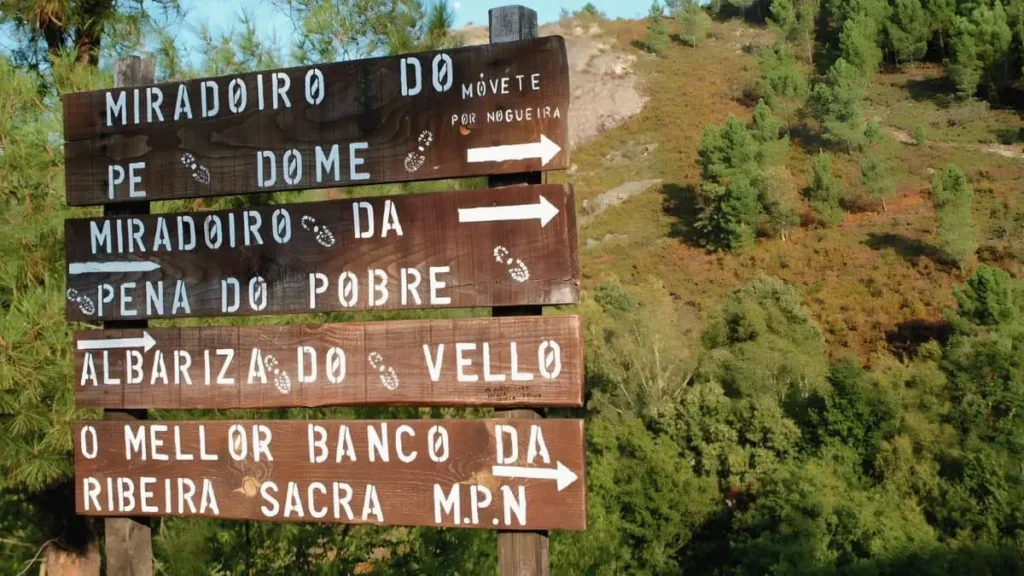
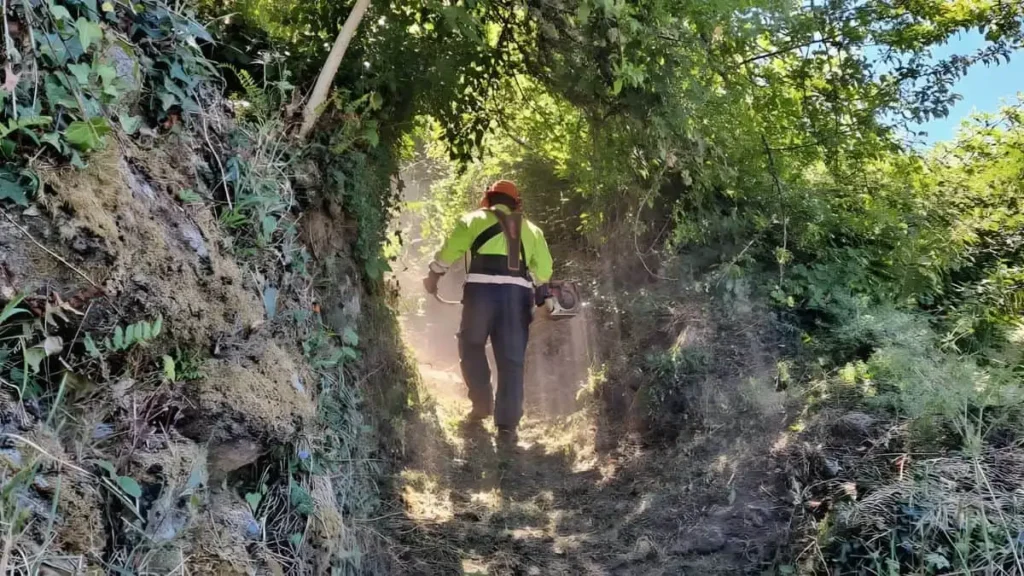
“A lot of people think reopening a path is just cutting brambles,” Chelo says. It isn’t. First you trace it — you work out where it went, which is the hard part, because a lost road disorients you and there is no one left to ask but the ground itself. Then you mark it. Then you clear it. Then, and this is the part that ends associations, you maintain it, forever, because the mountain does not agree that the work is finished. And somewhere in there you find out whether the path had a story, and you ask, while there is still someone to ask.
The people worth asking are disappearing. Chelo calls the old villagers “our encyclopedias,” and means it without decoration — they are the last copy of a history no one is reprinting. She talks about walking into hamlets where a single woman lived alone, sitting down, losing an afternoon to stories that now live only in her own memory. “Some day I’ll write them down.” The Camiño da Amargura carries one such story in its name: an 800-metre stretch up which, the tellers say, the condemned were once walked to a great rock with a cross, where they were hanged. Part legend, part record — she doesn’t pretend to know which, which is the correct way to carry it.
Strength moves things. But love moves more. If you don’t come to this with love for the land, don’t come at all.
If the work has an ideology, that is it. Chelo is precise that the association is apolitical — “we want nothing to do with politics” — and equally precise that this cost them. In the early days, she thinks, they were read as competition. When the local tourism office promoted a neighbouring council’s attractions over the ones on its own doorstep, she wrote, politely, to say so; the reply was insults, some from people inside the institution. They have had viewpoints vandalised, more than once, badly. “I suppose they wanted us to give up.” They didn’t. The relationship, she says, has improved lately — some machinery help arrived toward the end — but she is clear-eyed about what earlier support would have meant: “It’s not the same to have institutions handing you things as to fight them for the same things.”
The reward came from the walkers, and from the elders. She remembers the first route’s inauguration — four hundred people in the square at Luíntra — and the year the Contrabando route brought a wave of hiking associations through, and businesses noticing the difference. But the image she returns to is smaller: an old man’s eyes lighting up because a road he walked as a child led somewhere again, and he could go back down it, with them. “What the institutions were supposed to do, the neighbours were doing.” She says it without triumph. It is just what happened.
This is the Ribeira Sacra that doesn’t fit on a catamaran. Chelo has watched the other kind arrive — the visitor who comes to photograph a viewpoint and leave, “who rode the catamaran, took the picture, and that’s it.” Her Ribeira Sacra asks for days, not a stop. “You have to be a prophet in your own land,” she says, and the routes are her argument: not the shop window, the inside. Walk one of them and what you take away, she thinks, is not another canyon photo but the hospitality of people who still love the ground they stand on enough to keep it walkable.
For now, the brush-cutters are quiet. They changed jobs — a restaurant, long hostelry hours — and the association is, in Chelo’s word, in stand-by: social media included. A year and a bit without maintenance, and the mountain is doing what the mountain does. She is candid that the bodies are ten years older and there is no relevo, no one coming up behind to take the weight. She points to Roberto, a Luíntra neighbour who wasn’t even a member but pulled for the village harder than most, and who died — “Luíntra was orphaned when Roberto died.” Others might appear, she allows. But people who show up with a plan are common; people who show up out of love for the land are not.
What she asks for now is not money. She is emphatic about this — they never took a wage, put their own fuel and their own vehicles into it, and were still accused of getting rich off fifteen euros of annual dues. What she’d take is reach: enough visibility that someone, someday, might homologate a route, fund it, hire a local to keep it clear — turn the love into a job that could outlast them. Whether that happens is an open question. So is whether they start again in two years, once the restaurant settles. Chelo doesn’t close either door. She just notes, without drama, that the paths are there, that they were walked for centuries before her and cleared again for ten years by her, and that the mountain is patient. So, for now, is she.
All photos courtesy of Móvete por Nogueira. Not for reproduction without written permission.