We asked Carlos why his bread is better than everyone else’s, and he didn’t reach for any of the answers the question usually gets. No starter kept alive for decades, no heritage grain, no secret. Other bakers, he said, “have the same flour we have, and it doesn’t come out the same.” Then, by way of explanation: “We never did any advertising here. We make bread the way it was made forty years ago.”
We buy his bread at the shop on Avenida de Lugo in Taboada, and we first tasted his beef empanada at an event at Sabatelius, in Sabadelle. Asked to choose one thing he makes for someone who has never been here, Carlos doesn’t pick the empanada. “The bread,” he says. “That would tell him everything.”
Panadería Carlos bakes under three kilometres up the road to Monterroso, in San Martiño, behind a steel gate with wheat ears cut into it and a date: 1996.
Twelve and a Half Years
He came into the trade at 22, while he was getting his driving licence. A baker needed a lad, and Carlos stayed twelve and a half years. “I was more of a slave than anyone is today,” he says. No holidays. On the day of the village festa he was out on the rounds. Once, bogged down in an aldea in the rain, he carried five 50-kilo sacks of flour to the road on his shoulder, and got a dressing-down for it when he got back.
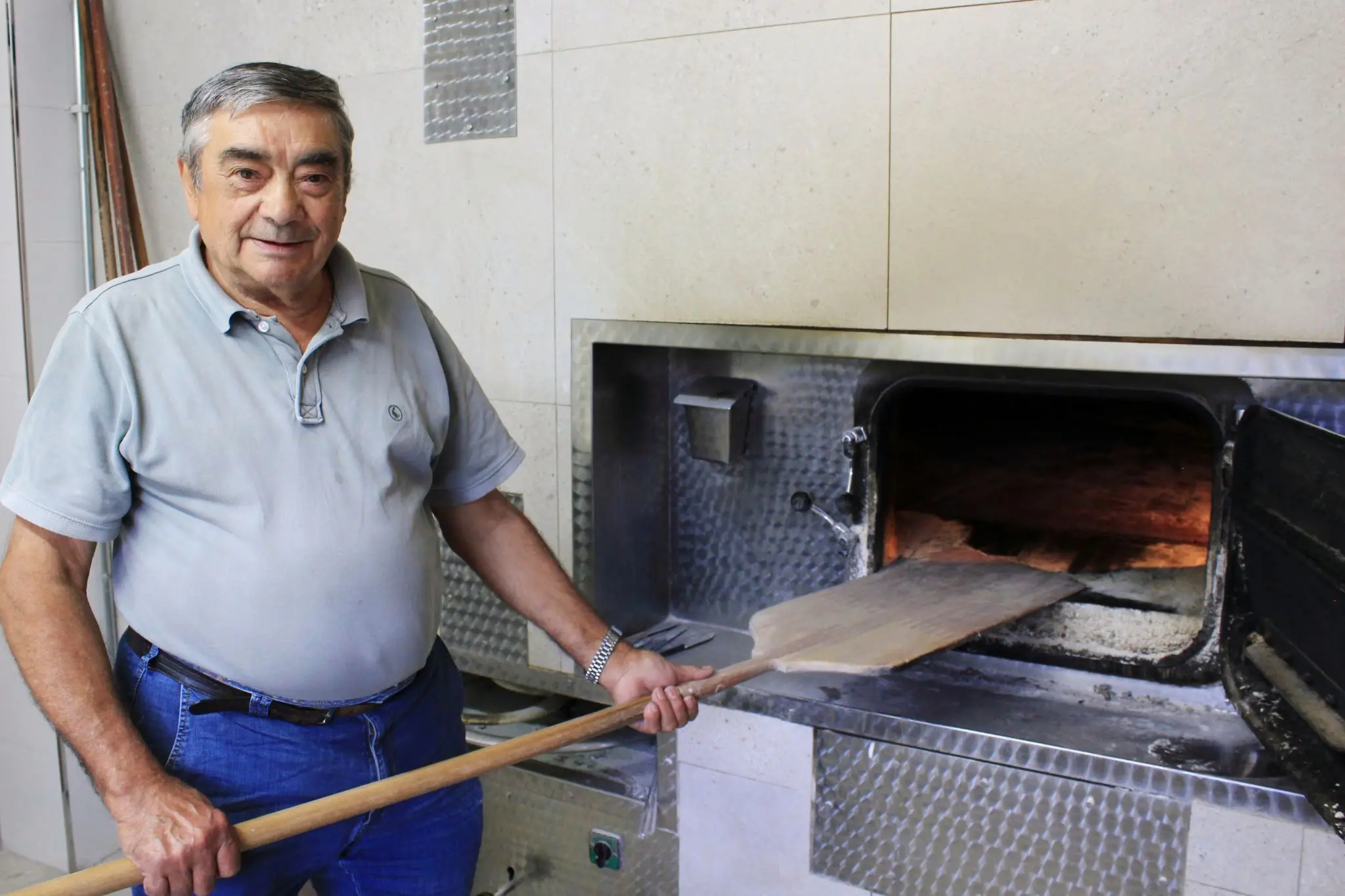
After that came other men’s bakeries. When one of them needed a new oven platform that the owners wouldn’t pay for, Carlos offered to pay for it himself, on condition of a contract long enough to get his money back. When he finally built his own, it cost eight and a half million pesetas, more than €100,000 in today’s money, for the oven, the kneader and everything else. The builders of his wood-fired oven no longer exist. “There’s nobody left who builds these ovens,” he says. He knows of one in Ourense province who still does, with very little work.
His bread became known through a supermarket. The manager of the Eroski in Chantada wanted his bread on the shelves, and two or three months later it was there. It still is, and at the Eroski in Taboada, and on the tables of Os Pendellos, A Faragulla and Mar & Bellota in Chantada.
Yeast and Flour
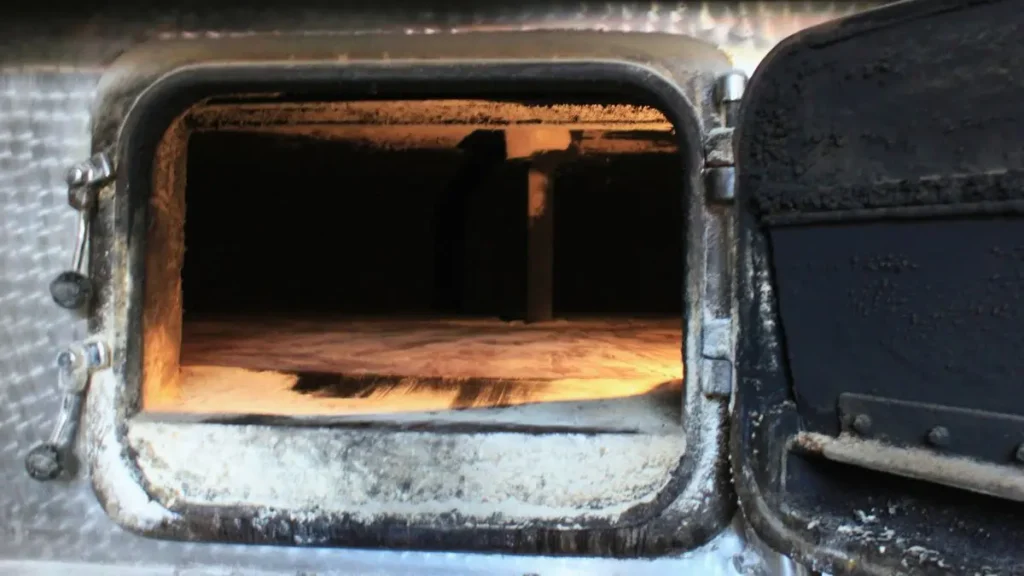
“Here we put in nothing but yeast and flour.” Carlos uses no sourdough, and doesn’t pretend to. What he is particular about is quantity. “We put in a packet and a bit for the two hundred kilos of flour,” he says. Others put in three or four packets and can go to the oven almost straight away. “Not us.” Nobody times the dough. They judge it by eye, shape the pieces by hand at the table, give them fifteen or twenty minutes, and load the oven.
The oven is fired from the back, with birch, and it is the flame that heats it. Asked whether the oven is the difference, he says yes, and the hand as well. There is also a modern deck oven from Madrid now, for empanadas and weekend rushes; he prefers the old one. The bakers get up at half past one or two in the morning so the vans can leave at nine.
The result keeps. “This bread is three days old,” he says, holding one up, and it is fine. It freezes, too. A couple from Barcelona load their car with a month’s supply before driving home.
Carlos was a member of AFAPAN, the provincial association of bread makers in Lugo, until a meeting where a Catalan baker gave a demonstration with additives. To him, it was chemistry. He told the president he was leaving. The association’s sticker is still on the shop window.
I grew up without a mother. And I said, when I have children, they’ll have a business of their own, so none of them has to be under anybody.
Pan do País
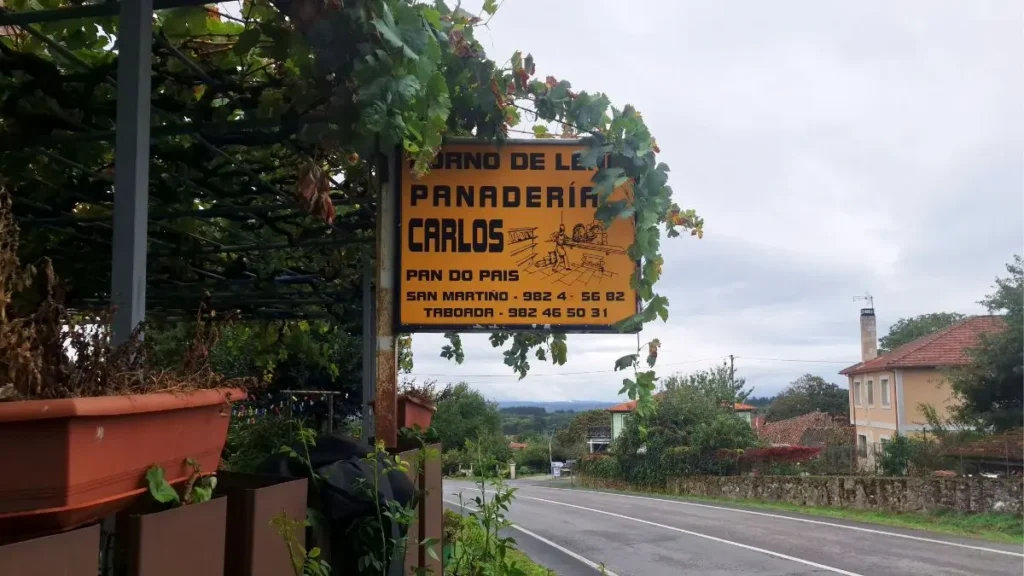
The sign over the road in San Martiño says Pan do país: country bread, bread from here. Asked what has changed since he started, Carlos says “nada, nada”, then corrects himself on one point. “The flour is del país, but it comes from a factory.”
They used to bake with local wheat, ground locally. Now, he says, there are no mills and nobody sows wheat. In later years he tried taking grain to one of the last millers. The miller ground when he felt like it, found fault with the grain, made him wait days, and Carlos stopped going. The wheat and the mill, he says, kept people working the land and “kept the economy moving.”
The words on the sign have outlived what they described, and the wheat on the gate is cut in steel, in a parish where nobody sows it any more, outside a bakery where, by his account, nothing else has changed.
Nobody Under Anybody
Carlos started his own bakery with his wife and their two daughters. The reason for doing it that way goes back further than the business. “I grew up without a mother,” he says. “And I said, when I have children, they’ll have a business of their own, so none of them has to be under anybody.”
It has held. The night shifts belong to the younger generations now, and Carlos no longer gets up at two. His daughters make the empanadas, every day, to order. The almond tart is the one customers ask for most; his wife learned it from the woman Carlos first worked for. At Taboada’s Festa do Caldo de Ósos she still hands out small bollos to the children.
Outside the family the trade has not passed on. No employee ever learned it from him. “It’s a failure,” he says, plainly. He understands why nobody wants it: “A lad who goes into baking is a slave.” The word is the same one he used for his twelve and a half years under a boss. The difference is who the business belongs to.
Por Pena
The vans still go round the aldeas. Carlos is clear about the arithmetic. “Before, there were maybe seven or eight in a family. Now there’s one.” In some villages two or three people are left, waiting for the van. He keeps the stops anyway, por pena: “You feel bad leaving an old man there for the sake of a loaf.”
Panadería Carlos · Avenida de Lugo 61, Taboada (Lugo)
Photographs: P. Vanossi for feelSacra. Not for reproduction without written permission.