The tranquillity here isn’t accidental. It took fifteen centuries to build.
There is a particular quality to the silence in Ribeira Sacra that takes most visitors a day or two to actually hear. Not the absence of sound — birds are loud here, the Sil river audible from a kilometre away, the wind in the chestnuts never quite still — but the absence of urgency. Nothing in this landscape is trying to entertain you. And that, once you surrender to it, is precisely why it changes you.
This is a territory shaped, across more than a thousand years, by a single recurring impulse: withdrawal. The hermits came first, then the monks, then the farmers who found no choice but to bend to the land rather than flatten it. What contemporary visitors read as ‘slow living’ is not a lifestyle choice — it is the accumulated logic of a place that has always imposed its own terms.
The Canyon as Cloister
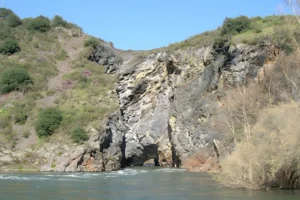
Between the 6th and 10th centuries, the dramatic gorges carved by the rivers Sil and Miño were not picturesque — they were strategic. Individual anchorites, seeking genuine isolation from the early medieval world, found in these cliffs something the flatlands of Iberia could not offer: natural protection, natural rhythm, and natural silence. The rock faces were not simply beautiful; they were defensive. The rivers were not decorative; they were boundaries.
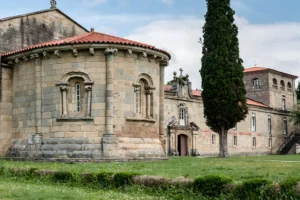
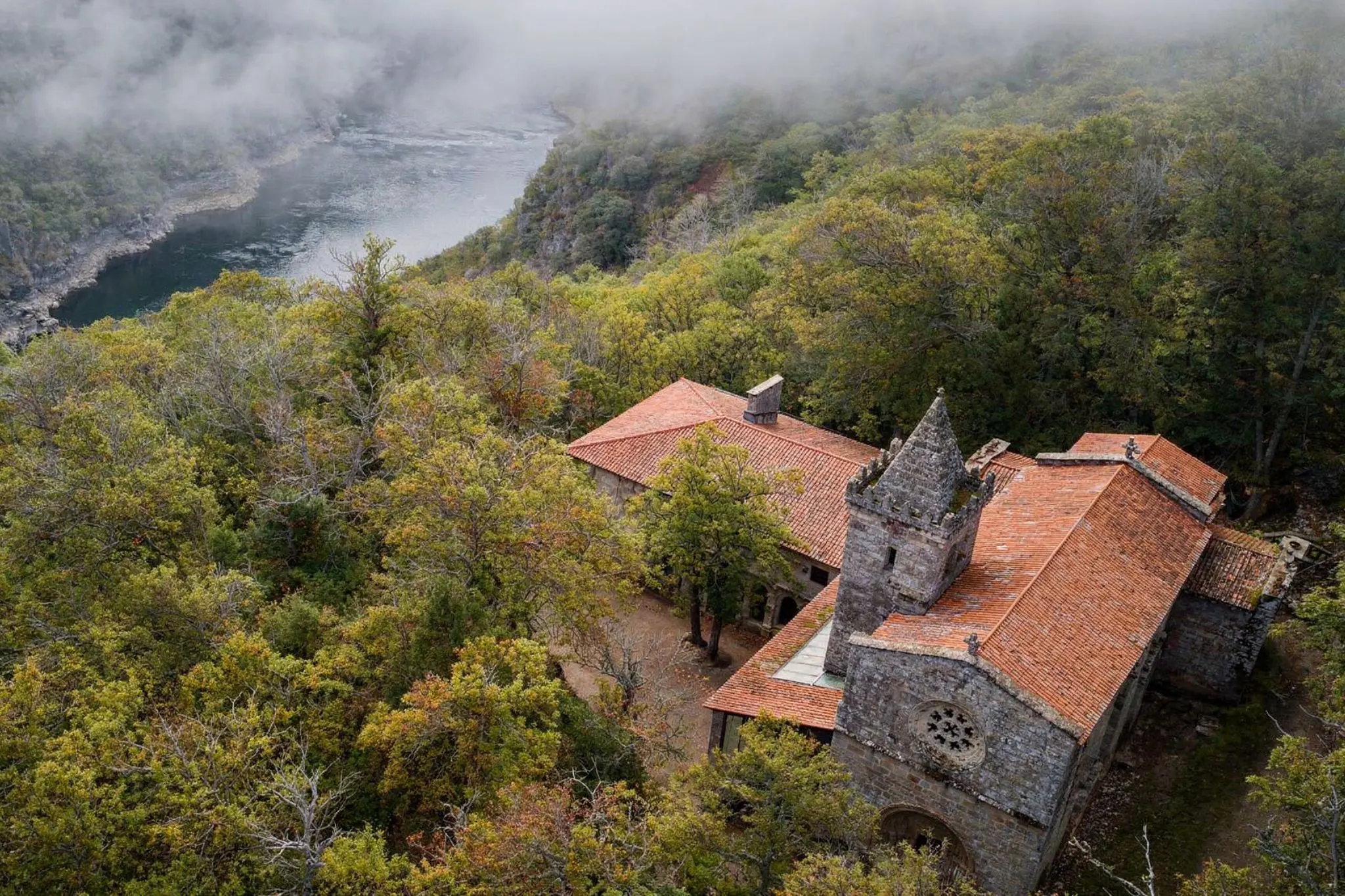
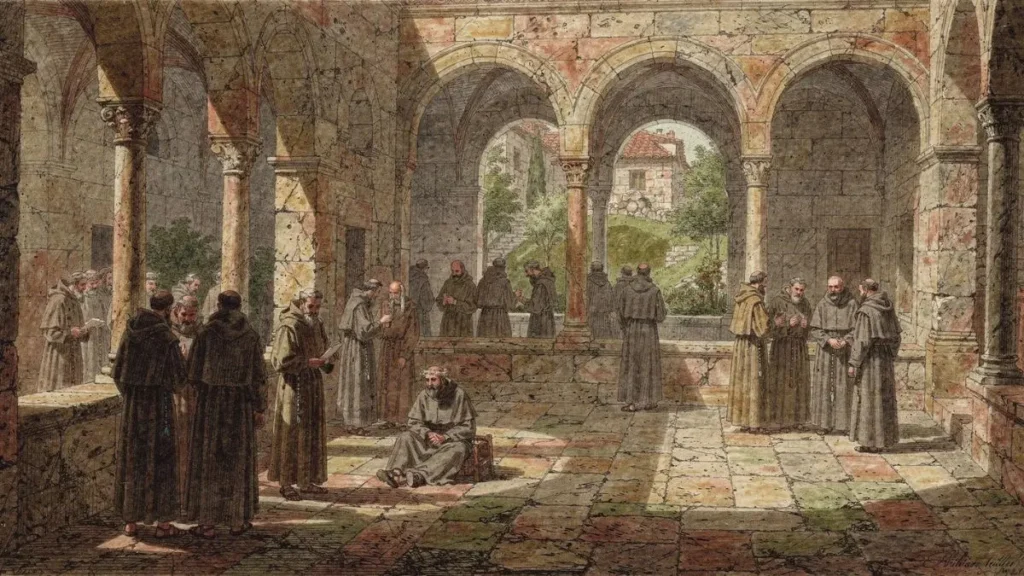
The Benedictine consolidation that followed — visible today in monasteries like Santo Estevo de Ribas de Sil and Santa María de Montederramo — did not contradict the eremitic logic; it organized it. Monasteries became networks of silence rather than interruptions of it. The architecture itself says something: walls thick enough to muffle the century outside, gardens enclosed not for pleasure but for prayer, corridors designed to slow the step before it reaches anywhere.
Ribeira Sacra is not spiritual in the vague, spa-brochure sense. It is architecturally and geographically engineered for retreat. The form precedes the feeling.
Heroic Viticulture, or: Constraint as Craft
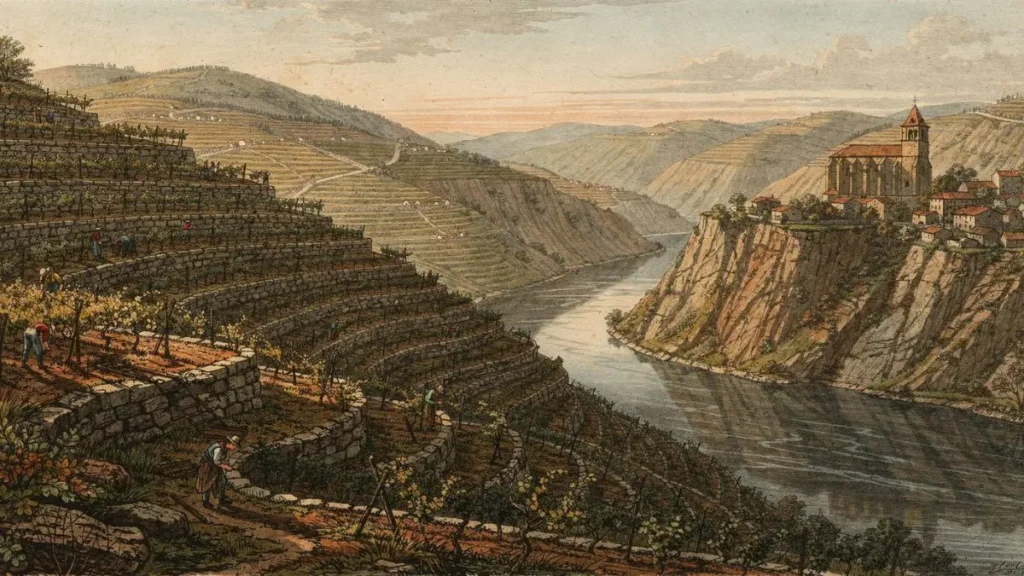
The term viticultura heroica — heroic viticulture — is used across the wine world for steep-slope growing, but in Ribeira Sacra it describes something closer to an existential commitment. The canyon gradients reaching 85 degrees in some subzones of the Cañón del Sil make mechanization not just difficult but physically impossible. Every bunch of mencía is harvested by hand, often lowered to the riverbank by boat. Some families manage a quarter of a hectare over a lifetime.
The parallel with the monks is not metaphorical — it is structural. Both accepted the land’s conditions as a given. Both worked vertically, not horizontally. Both produced, in the end, something remarkable precisely because it could not be scaled. When you drink a glass of Ribeira Sacra in a bodega above the river, you are drinking the logic of the place.
Time as Material
Elsewhere, the seasons are backdrop. Here they are the calendar itself. The chestnut harvest in November — the magosto — is not a festival invented for tourism; it is a necessity dressed as celebration, the same pragmatic festivity that has marked the turn of the year in Galicia for centuries. Pruning begins in January, not because it is scheduled but because the vines require it. The fog burns off the river by mid-morning or it doesn’t, and the day is planned accordingly.
In Ribeira Sacra, time is material. You can feel its texture in the way a morning in March differs from a morning in September, in the way the same valley looks entirely different under the green weight of June and the stripped amber of October. Visitors accustomed to abstracting their relationship with time — to living by notification rather than light — often describe something close to disorientation in the first two days. By the third, it begins to feel like information.
The Table Remembers
The food of Ribeira Sacra did not evolve for gastronomes. It evolved for people who worked physically hard in a wet climate and needed fuel. Lacón con grelos, cured pork with bitter turnip greens. Filloas, thin crêpes made during slaughter season when blood was available. Smoked meats that owe their flavour to the particular density of Galician oak. The techniques are preservation techniques — salt, smoke, fermentation — born of necessity before refrigeration and continued now by habit and by taste.
Nothing here was invented for visitors. Which is precisely why visitors find it so affecting. The table in Ribeira Sacra is not a curated experience — it is cultural continuity, served warm.
Two Rivers, One Territory
The geography of Ribeira Sacra is best understood through its two rivers, which have entirely different temperaments. The Miño is wide and slow in its lower reaches — agricultural, soft, the river of floodplain and continuity. The Sil is a different proposition entirely: dramatic, canyon-cut, vertical in its logic. Together they define two modes of the same place — one horizontal and accumulative, the other vertical and resistant.
The monasteries tend to occupy the edges where both logics meet: above the gorge, overlooking the valley, positioned at the threshold between withdrawal and world. It is a useful metaphor for the territory as a whole.
Who Stays, and Why
The question worth asking — and the one this publication will return to — is not what Ribeira Sacra offers visitors, but what it offers those who decide not to leave. The answer, from the growing number of European arrivals settling in the area’s villages, is less about cost of living (though that plays a role) than about something harder to quantify: a reduction in what might be called ambient friction.
Daily life here is slower, yes — but not because it is empty. It is slower because it is legible. The scale is human, the social fabric is intact, the relationship between effort and result is visible. These are not small things.
It is worth being honest: Ribeira Sacra is not for everyone. The winters are long and grey with a specific Atlantic persistence. The nearest city is over an hour away. Infrastructure is minimal in many villages. Isolation can shift from poetic to simply isolating on a Tuesday in February. Anyone considering a life here rather than a visit should sit with that.
Recalibration, Not Escape
The word that comes up, repeatedly, among those who know Ribeira Sacra well — whether they arrived last year or were born here — is claridad: clarity. Not enlightenment, not transcendence. Just the particular mental legibility that comes when the noise drops, the pace slows, and you remember what was always there.
You don’t come to Ribeira Sacra to disconnect. You come to notice what you had stopped noticing — once everything else, finally, falls away.