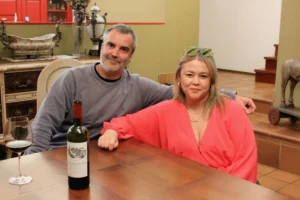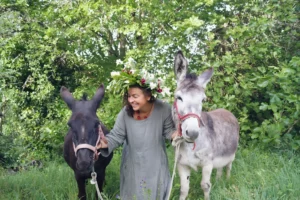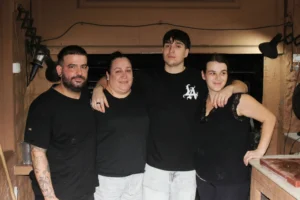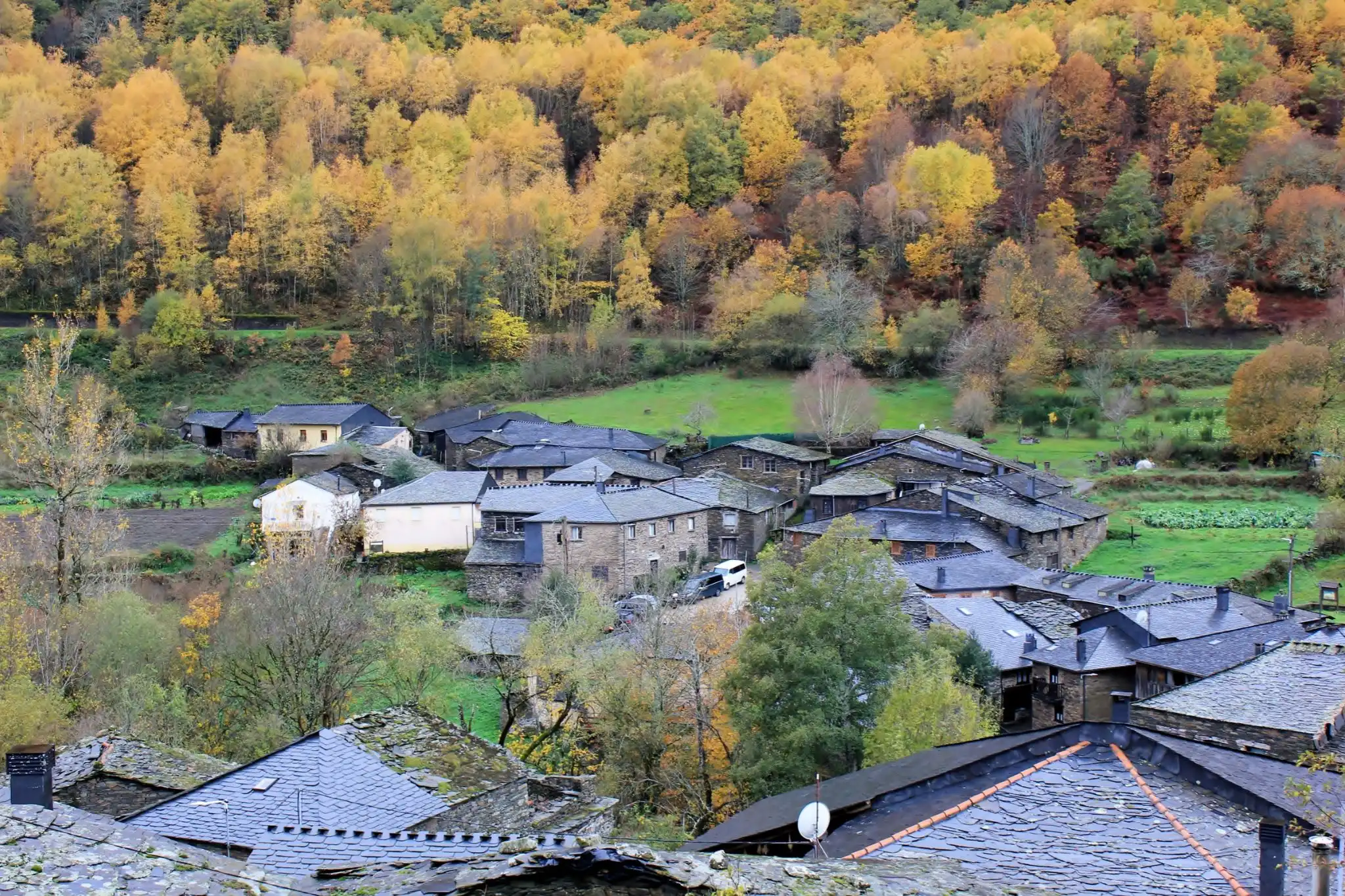
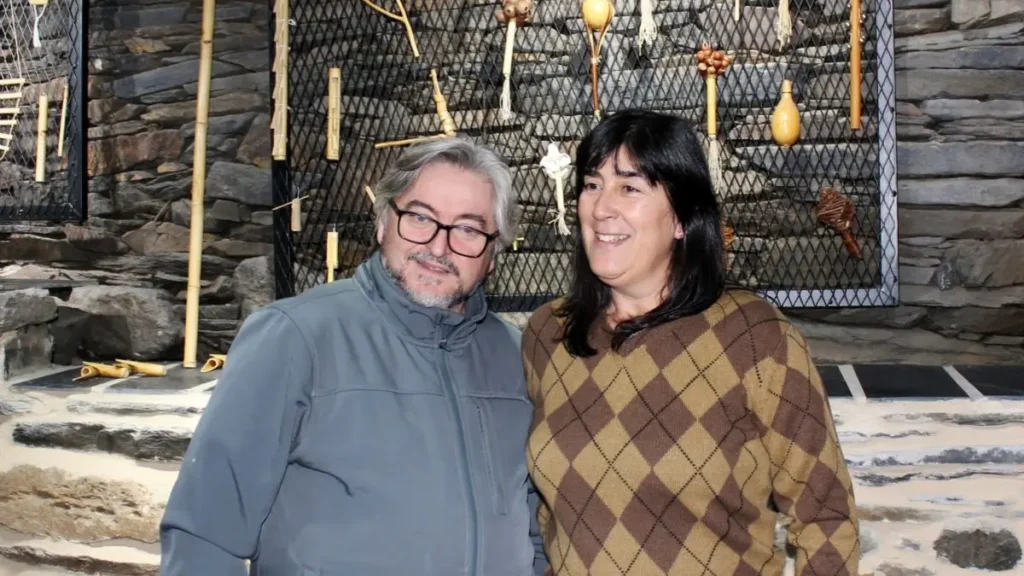
A Seara is an aldea of stone and slate in Quiroga, inside the Montañas do Courel UNESCO Global Geopark, and one of the most beautiful villages we know in Galicia. It drew visitors before Fundación Legar arrived. On the day we went, most of them were heading for the same place, the foundation’s Centro de Interpretación da Música de Raíz, in a restored farmhouse that keeps its stable and the room that once held a loom. Xavier Blanco and Martina Ferradás set up the foundation to bring together more than 1,200 instruments and the sound archive he has spent more than forty years building. The visit is guided and hands-on: some instruments come off the wall and are played, and each one comes with its story. The casas rurales of the Courel now send their guests up to the Centre, and many of them stay on to eat at the village restaurant, which has reopened. It is a small economy, but it has started to move.
Q. You started recording at twelve. Who came first?
Xavier: My family, above all my grandfather. I had a cassette recorder, and with it I started to understand that a song can’t be separated from the person who sings it. I recorded my grandfather all the time, because I loved what he had to say. He gave me the rule: never force anyone to sing. If they want to sing for you, good; if not, no. I never went from village to village with a backpack. I play, and people come up and say: my grandfather played a leaf too, like you, only it was ivy, not laurel. They give you the information without being asked.
Q. And the Soledás?
Xavier: The Soledás were my first school. They’re my mother’s family, from Moaña: eighteen brothers and sisters, and they all sang and played. There was never anything to spare. My grandfather was a fisherman, and while they waited for him to come home with some fish, they sang and danced to forget the hunger. The name comes from an ancestor, Soledá: everyone was somebody “de Soledá“. There’s even a song about them: who will mind the house while they’re all out dancing? Nobody had to, because there was nothing to steal. That’s where I learned that root music isn’t just a repertoire: it’s a way of life.
Q. Why A Seara?
Xavier: We’d known A Seara for a long time and were fond of it. I like conservation, the old villages, the same as with the instruments. And the mountain is the right context: coming to a medieval village in the mountains is a journey in time, and so is this music.
Martina: When the chance came up to restore a house in the village, we saw it could be the place to open all this research to the public. We didn’t want just to put a collection on display. We wanted a project with roots in the territory, one that would also keep rural life going here.
Q. What did the village make of it?
Martina: From the start we knew we had to tell the neighbours and listen to what they thought. We came to recover heritage, not to change A Seara.
Xavier: We explained it to them in a dome a local art teacher built from barrel hoops in his meadow. The welcome was wonderful.
Q. Nothing here is behind glass, except the gaita de cana from Moaña. Why that one?
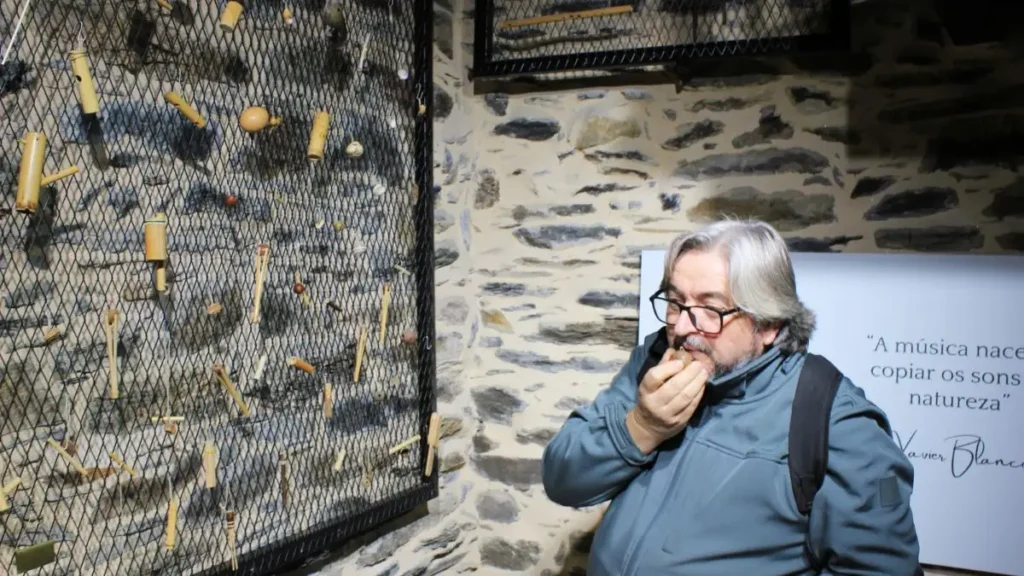
Xavier: That one I collected myself. It was one of the first things I worked on; I’ve played it in more than 28 countries, and it was my first record. It’s a very valuable piece, and it needs conservation conditions the others don’t. The rest hang on panels across three rooms: the earliest instruments, the festive cycle of the year, and rhythmic movement. During the visit, carefully, some come down and get played: this morning there were children playing the pandeiretas. We don’t want them to be mute objects.
Seeing creates the desire, but it doesn’t fulfil it. You fulfil it when you touch.
Q. What do you mean by root music?
Xavier: I usually explain it with a tree. In the root are these instruments and their music. In the trunk is traditional music, folklore. In the branches, the modern trends. None is better than the others; what matters to me is knowing where they come from. A guitar can play root music, but you can’t catalogue it as a root instrument. A leaf, a reed, a shell or a work tool, yes: they can carry musical knowledge that goes back a very long way. The first panel starts from a hypothesis: music was born from copying the sounds of nature. I do 190 bird calls.
Q. Traditional music is in fashion. Does that help you?
Xavier: It does no harm: anything that sparks interest in our musical heritage is good. But on a stage something is always lost. If I do these bird calls in the middle of a souto, on the mountain, nothing compares: that’s where they were made, and what for. On stage you have to harmonise, add instruments, make it pretty at any price. That’s fine. You just have to keep the root.
Q. Many of the people you recorded are gone. What’s being lost?
Xavier: I don’t think anything is lost. Every instrument I explain takes me back to someone: I remember who taught me, how they did it, where we were. For years people have said there’s no one left who knows. Then the daughters and sons, and people who aren’t even family, remember something they heard: my grandmother used to sing this. Years later it comes back to them. Those of us who do this say the information is in the air. In the end, it reaches you.
Q. Martina, your background is in dementia care. Where does root music fit in?
Martina: It’s one of the most important strands of our work. With IM·Raíz, our programme of therapeutic intervention through root music, we work with organisations that care for people with dementia, with disabilities and with mental health support needs, always alongside their professionals. We start from what each person knows and remembers: we listen, we sing, we recognise sounds and share memories.
Q. How does a foundation like this pay its way?
Martina: Mostly from the work we do all over Galicia: teaching concerts in schools, instrument-making workshops, cultural activities. That pays for the Centre in A Seara and for new projects. Visits bring something in too, and the occasional grant for specific initiatives, but the base is what we do all year round.
Xavier: This has been my whole life, and I want to carry on. I’ll keep it going whatever it takes.
Q. And in ten years?
Xavier: Here, in A Seara. It isn’t going anywhere. I see myself making instruments, sharing what I know, and with people coming not only to visit but to study what we’ve collected. Galician identity is my field, but every community has its own, shaped by its land and its resources. What matters is looking after what characterises us, not setting anyone apart.
Martina: What we want is for this legacy not to depend only on those of us who started it, and for new generations to know it and keep passing it on.
Fire Round
A place
A Seara.
A dish and a wine
Caldo gallego and a mencía.
A route
The Lagoa da Lucenza, a glacial lake up in the Courel.
A word
Purity, “in every sense: clean air, drinkable water.”
Photographs: P. Vanossi for feelSacra. Not for reproduction without written permission.