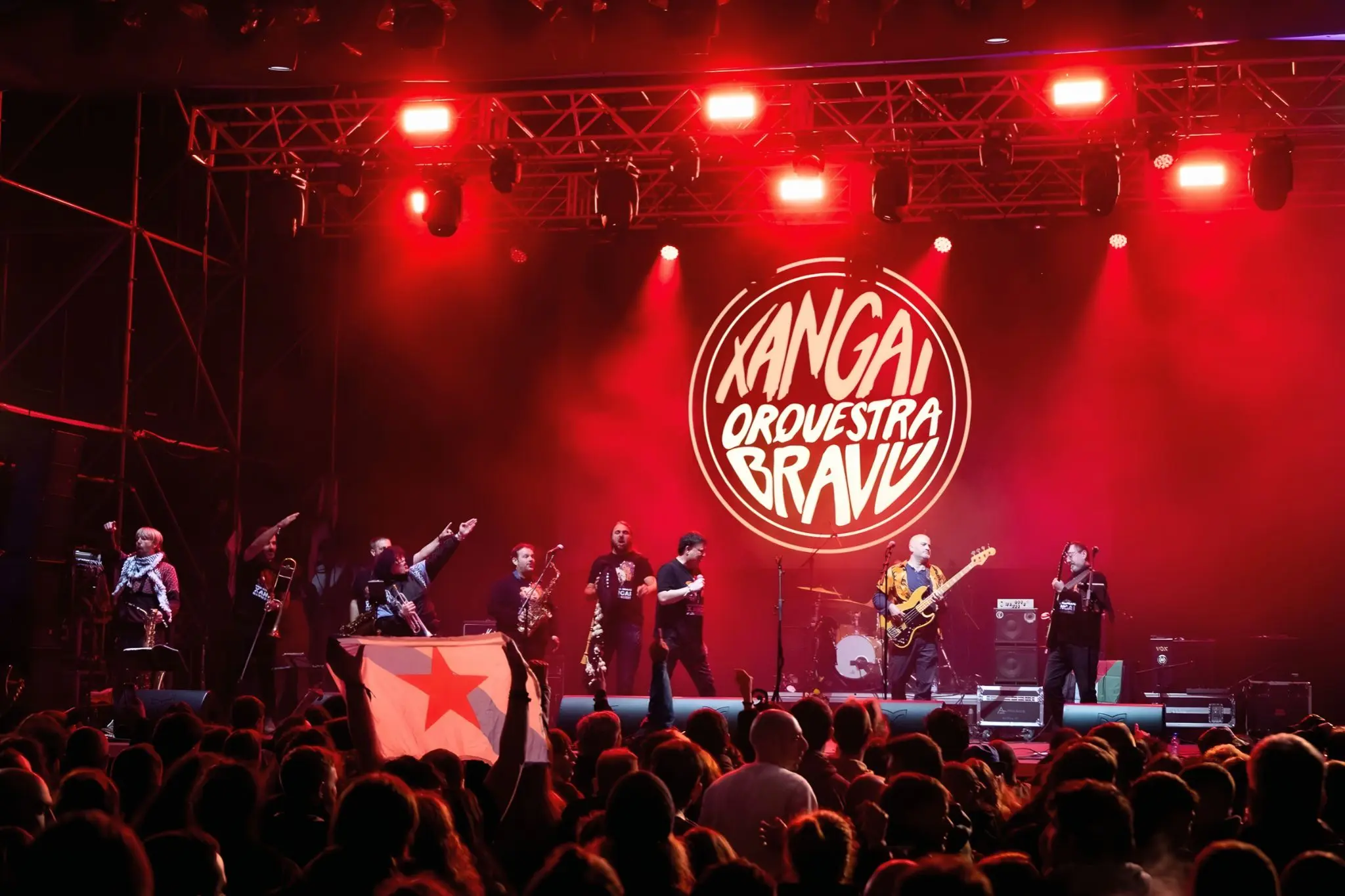
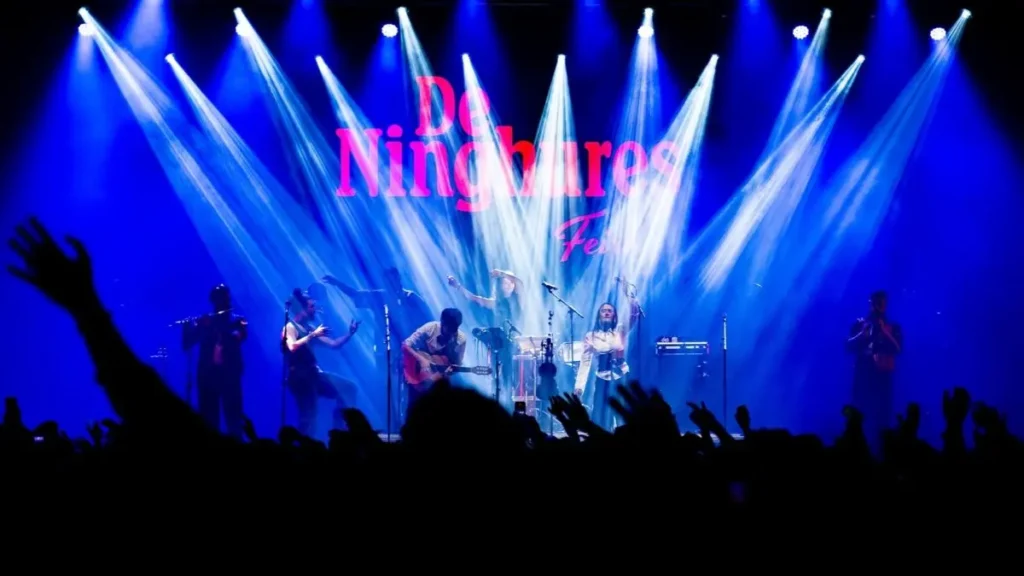
The name sticks, and it is meant to. Castaña is chestnut, and the Castañazo has always fallen in the last days of October or the first of November, when inland Galicia starts gathering around fires for the magosto, the autumn chestnut roast. The festival belongs to Chantada, and for two nights it fills the covered livestock market at the Feira do Gando with bands chosen, one assembly at a time, by the association that runs it.
Where Bravú Got Its Name
The first edition, in 1993, was held in a bajo, a street-level commercial unit with its front half open. Guitars and the louder end of alternative music had begun reaching the villages of the interior, and young people there started making songs out of the lives they were actually living. Fernando Vázquez, who now presides over the Asociación Cultural O Castañazo, calls the movement that came out of it, Bravú, “our root.” He dates its manifesto to that first edition; other sources put the naming at the second, on 31 October 1994, in a tavern in the hamlet of Viana. Either way the word came out of Chantada, as did Os Rastreros, one of the bands at its origin.
Three Editions, Then Nothing
The early festival ran for three editions and stopped around 1996, for lack of institutional support. In 2007 a new local generation, joined by a few of the originals, brought it back. The second start was almost as slow as the first: a rock festival drew crowds of strangers into Chantada, and the neighbours took time to warm to it. The association set out to shed its rebel image because it wanted them involved. Support followed slowly, and public money now comes from three levels of government — the same kind of backing whose absence ended the first run.
What did not soften is the language. Galician bands are always on the bill, sometimes half of it, and for the tenth and twentieth editions every band on the bill sang in Galician. Asked whether that is an artistic or a political choice, Fernando says both: the people behind it are committed to keeping Galician culture on its stage.
From the Taverns to the Market
For years the festival happened only inside the livestock market, and the rest of Chantada carried on as normal. The free daytime programme in the centre was built to change that. The cantos de taberna, its best-known part, send groups of up to ten singers through the bars, three taverns each, with popular songs or their own. There have been no prizes since earlier participants suggested dropping them, and the afternoon converges into a parade behind a brass band that walks to the opening of the concerts. The rules also ask the groups to leave out the sexist and homophobic lines the tradition carries plenty of. The xogos bravús revive Galician games that are falling out of use, and on the Saturday evening comes the magosto itself, chestnuts for everyone, because the festival was named after it.
The Relay
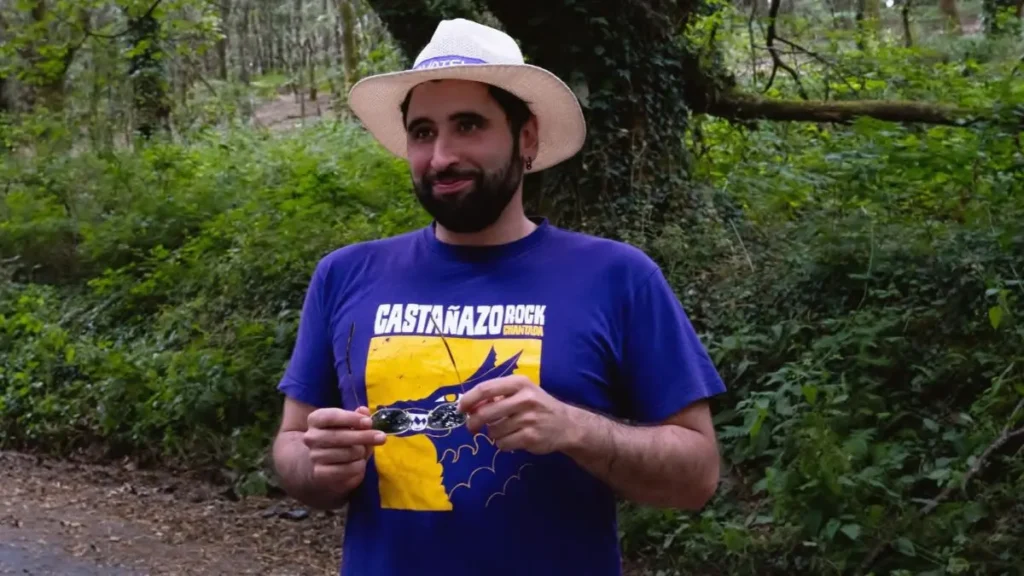
The moment Fernando picks from twenty years is not a concert. The pandemic stopped the festival, and Ibán, president since 2007, was worn out after years in the role. “It seemed like it was ending.” Those who were left agreed to try a couple more years, without much faith. Then young people from Chantada, most of whom the older members barely knew, joined because they had gone years without a Castañazo and wanted it back. The first edition after the break, in 2023, worked, and Fernando calls it magic. Members now range from eighteen to almost fifty, and the youngest were not born when the first edition was played. Decisions are taken in assemblies every two or three weeks.
Those assemblies also build the bill, and Fernando is proud of their ear. In 2023 they booked Fillas de Cassandra on the strength of two songs; he counts the group among the strongest in Galicia now.
Fest Clásico‘s organisers name the slow loss of unpaid will as the thing that would end their festival. Here it very nearly did, and the gap was filled by newcomers. The relay is recent, and Fernando does not oversell it. He wants no international reach and no change of scale: “We don’t need it to be bigger or smaller. Just that it stays the same.”
The 2026 edition runs 30–31 October at the Feira do Gando, with the tavern songs and the magosto on the Saturday. Camping is free, in two school sports halls nearby, on a first-come basis. Tickets through Woutick; programme and practical details on the festival’s website and Instagram.
All photos courtesy of Asociación Cultural O Castañazo. Not for reproduction without written permission.