There is a passage in the Gospel of John — the one about the multiplication of loaves — where the miracle seems almost incidental to the editorial point: that bread, in this part of the world, has always been the baseline against which everything else is measured. Wine gets the theology. Bread gets the mill.
In Ribeira Sacra the mills are still there, or what remains of them. The muíños along the tributary streams — the Mao, the Cabe, the smaller unnamed channels — ground rye and wheat on the same logic for centuries: gravity, water, stone. The territory’s vertical architecture was useful for more than vineyards. Rye came from the upper plateau; wheat from the softer agricultural parishes around the Miño; the mix depended on what the land offered that year, not what the recipe demanded.
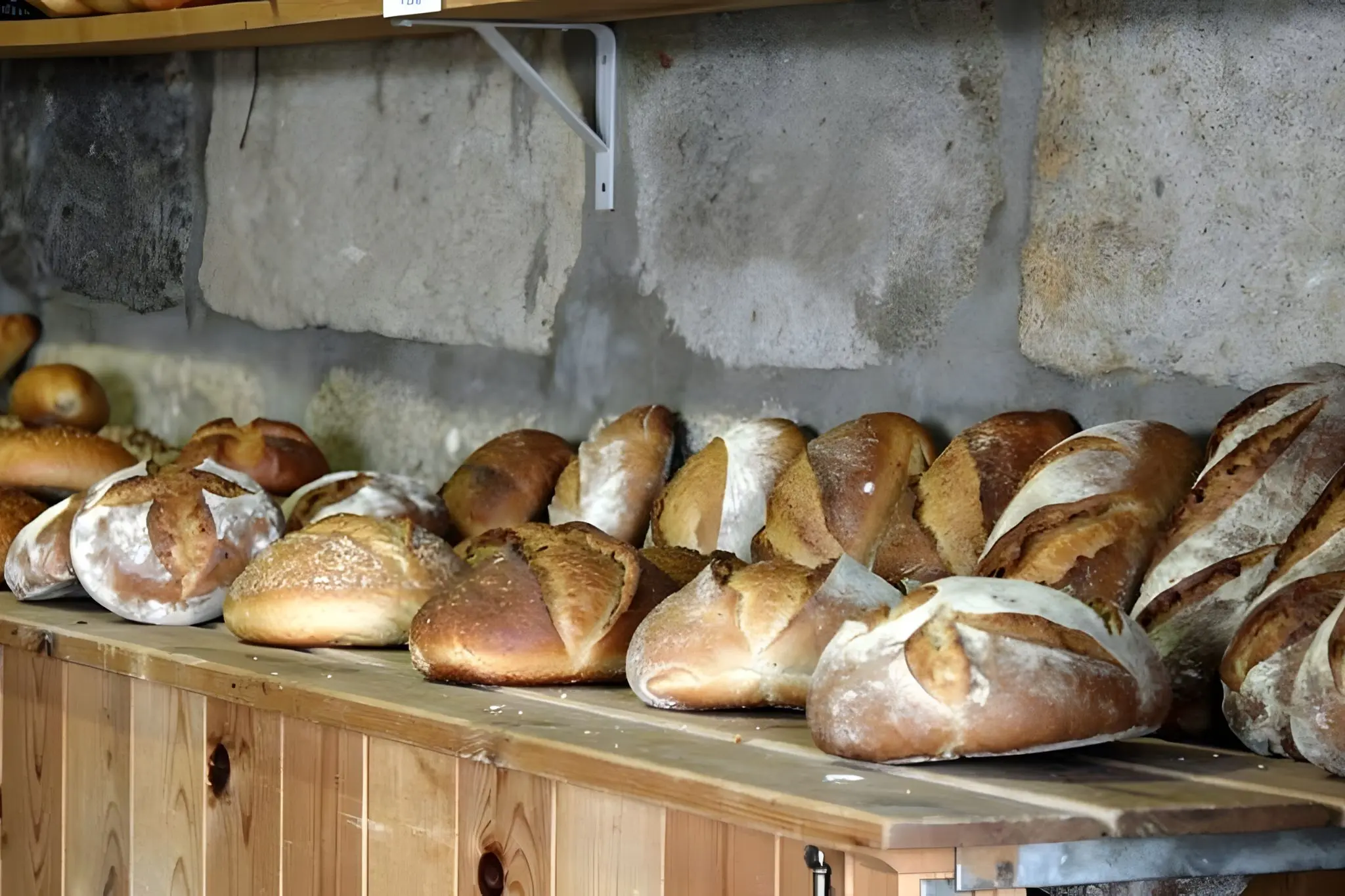
The bread that emerged from this was never meant to be interesting. It was meant to last. Slow-fermented, wood-fired, dense crumb, thick crust — the kind of loaf that sits on the table for three days without apology. The fogaza — the round, rustic boule still found in local markets and village bakeries — is not a craft revival. It’s just what bread looked like before craft became a category.
You will not find the thousand varieties of a city bakery here. No sourdough menus, no flour provenance cards, no laminated croissants. What you will find, at almost every panadería worth stopping at — and there are several in Chantada, in Monforte de Lemos, in the smaller parishes that still have one — is bread that is consistently, quietly good. Not because anyone is trying particularly hard. Because the baseline was never abandoned.
The connection to wine is older than marketing made it. Bread and wine were the agricultural grammar of monastic life in this valley. The Benedictine and Cistercian communities that shaped the territory needed both to function — not as symbols, but as calories. The hórreo beside the monastery was not decorative storage; the vineyard terrace beside it was not a landscape amenity. Together they were the production system. The pairing on the table now is the same pairing that kept the institution standing for eight centuries. It just arrives with a label these days.
The bread worth looking for is not in the restaurant. It’s on the counter at the village shop, or at the Saturday market stall that runs out by ten. It doesn’t announce itself. In that respect, it fits the territory perfectly.