The specification of the Arzúa-Ulloa protected designation, the document that fixes what may be sold under that name, lists the older local names its cheese once went by. One of them is “queso de Chantada“.
Suso Mazaira has never heard the name. He is one of the three partners behind Airas Moniz, the cheesemaker in the parish of San Salvador de Asma, in Chantada, and his guess is that it referred to what the local dairy firm produced: a ball cheese wrapped in red paper, and tetilla.
That firm has a precise starting point. In 1933 the Rodríguez López brothers began making Arzúa-type cheese on a professional footing at Granxa Arxeriz in Chantada, and went on to open an industrial plant in the town; the family’s Larsa brand followed in 1947, headquartered in Vilagarcía de Arousa, on the coast. In Suso’s account, this is what ended cheesemaking at home in the area. Selling the milk paid better and paid at once: men came round with carts, donkeys or horses, loaded the churns and settled on the spot. He sets Chantada against Taboada, Monterroso, Arzúa and Friol, where the household cheese survived. Here he knows almost nobody who still makes it. His partner Ana Vázquez’s grandmother did, back in the day.
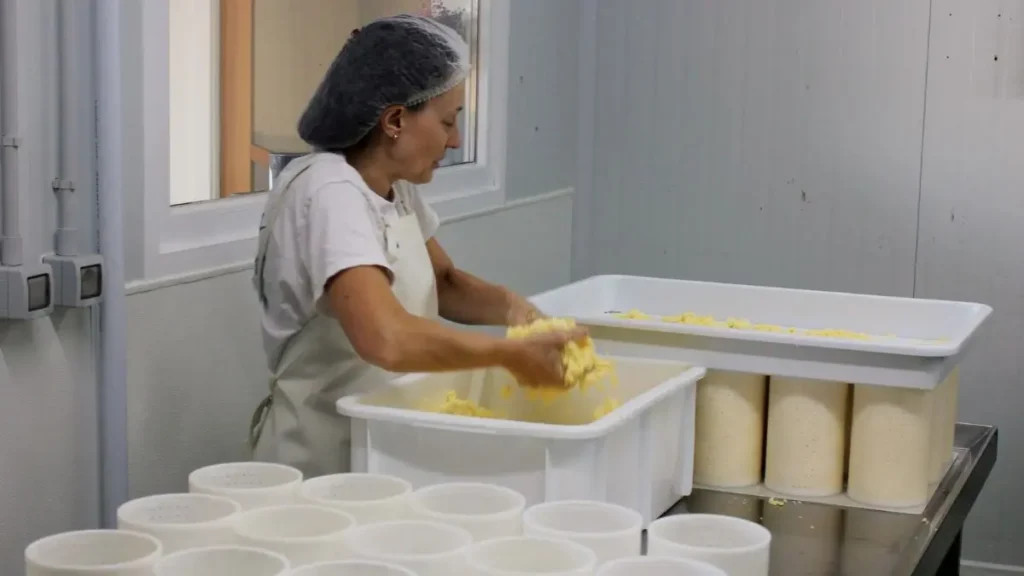
Out of the Milk Economy
Airas Moniz grew from inside that economy. Ricardo Gómez, the third partner, ran a Friesian herd that Suso counts among the best in Galicia: many litres, little fat or protein, milk meant for the carton. The cheese came first as an idea, and the cows followed. Travelling through farms and dairies in Europe, the partners noticed that the cheeses with most character came from raw milk, usually from native breeds or from milk high in solids. An unusual shape, Suso says, would only have made theirs one more cheese. The difference had to be in the milk.
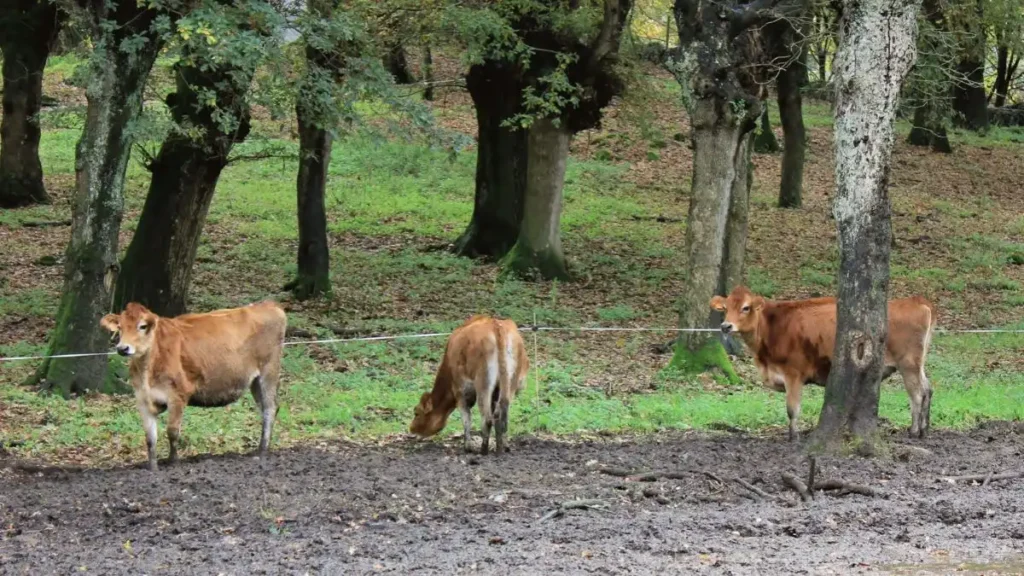
The first plan was Rubia galega, the Galician breed, but in Suso’s telling the cow they wanted no longer existed: after Friesians arrived in the 1940s, the Rubia was bred for meat and lost its qualities as a milker. They needed another breed with milk as rich in fat and protein as the Rubia’s had been, and able to cope with the Galician climate and with the farm. Ricardo had been watching the Jersey for years. The first twelve came from Denmark. They bred from them by insemination, watched how the cows did on the farm, and once the results were clear, replaced the entire Friesian herd with Jerseys. The cows graze, and are given no silage, the fermented fodder that stands in for fresh grass. Suso’s own summary is modest. Their grandparents kept three or four cows, took them out to the field next to the house, gave them hay when there was no grass, and made cheese with raw milk. “We haven’t invented anything. We’re doing what they did, with a different breed.”
The Arithmetic of a Seal
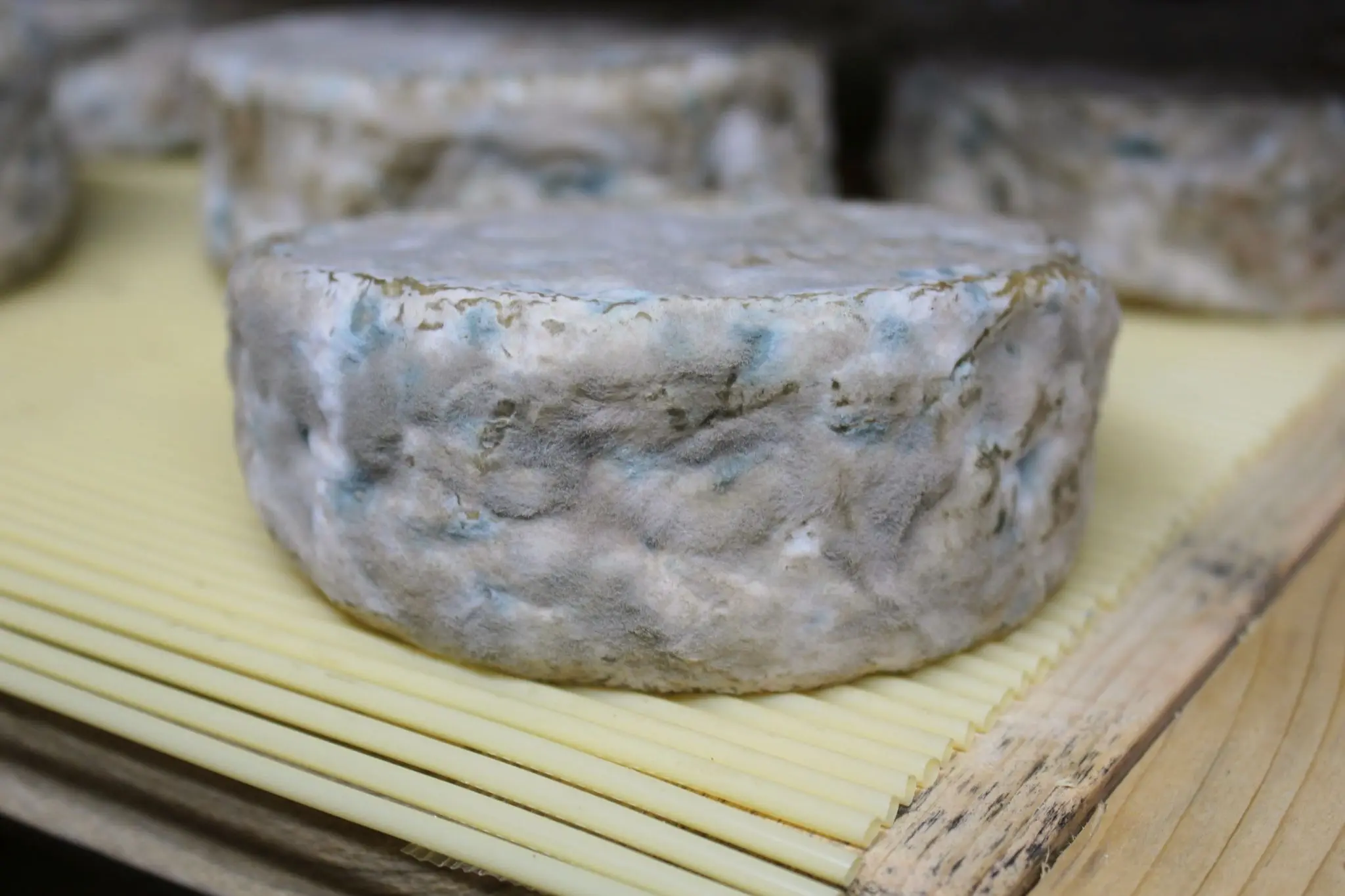
The Jersey alone would have kept Airas Moniz out of the designation, which admits only Rubia galega, Parda alpina, Friesian and their crosses, and Savel, the blue that came once the partners had mastered the milk, is not among the cheese types it protects. Neither rule is what decided it for Suso. “The main reason was price.” When they drew up the business plan, Arzúa-Ulloa and Tetilla were selling at five to eight euros a kilo, and at that level the project did not work. What has always grated, he says, is that a seal meant to put value on a product, a territory, its people and a way of working ends up cheaper on the supermarket shelf than bar cheese.
That would make it a stance against the system, except that Suso is open to the idea. Airas Moniz would probably join a designation that took in Jersey milk and blue cheese: nobody yet carries a price in their head for a protected one, so their own price could stand. A standard Arzúa-Ulloa he rules out completely. On its own, the milk is too rich for the style. Bringing the fat down would take a Friesian blend, and the result would be the cheese everyone else makes.
The same reasoning runs through everything else he turns down. They looked at organic certification and dropped it: it would open a few shops that sell only organic produce, and add nothing to the cheese. Medals go the same way. The cheeses have won plenty, and none is printed on a label, because an award goes to one batch on one day from one jury, and a good cheese has to be made every day. Not having a seal, he says, has cost them nothing, in shops, in export or in price. “The best seal is keeping the doors open,” so that people can see for themselves how the cows are kept and fed.
What Chantada Keeps in the Fridge
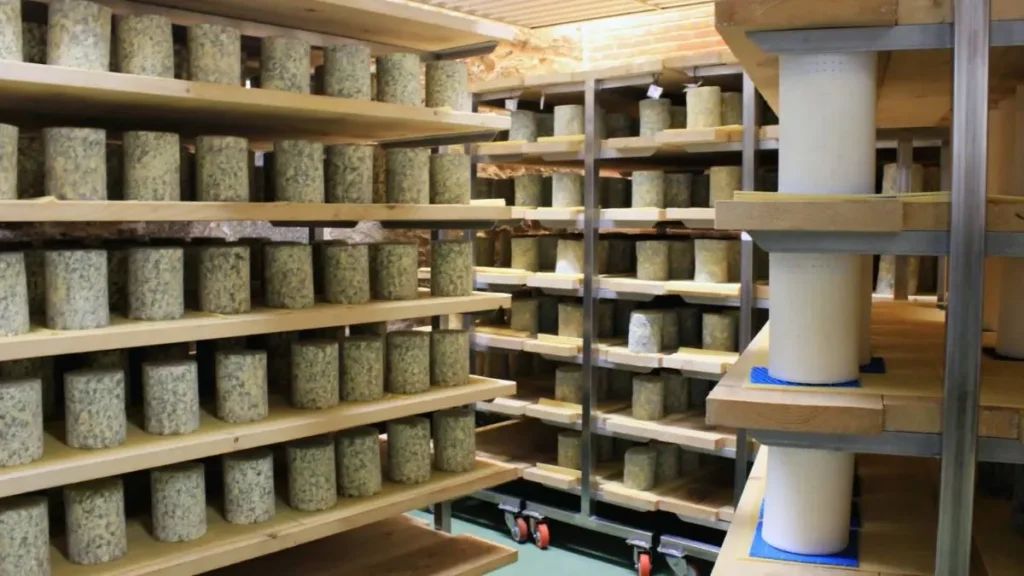
Asked what cheese Chantada eats, Suso starts with the supermarket, because that is where most people shop. After that he names two. One is Dajosefa, made in Palas de Rei from raw milk, salt and rennet, worked by hand after each milking and left to ferment on the bacteria of the cows and their surroundings, with no cultures added; he calls it the only true queso del país, local cheese. The other is his own. It appears on most restaurant menus, sells through three shops in the town as well as at the farm, and, Savel above all, sits in household fridges, ready to show off when someone comes to visit.
Curd into the moulds by hand; Jerseys under the trees; Airas Moniz cheeses in the cave — photos by P. Vanossi.