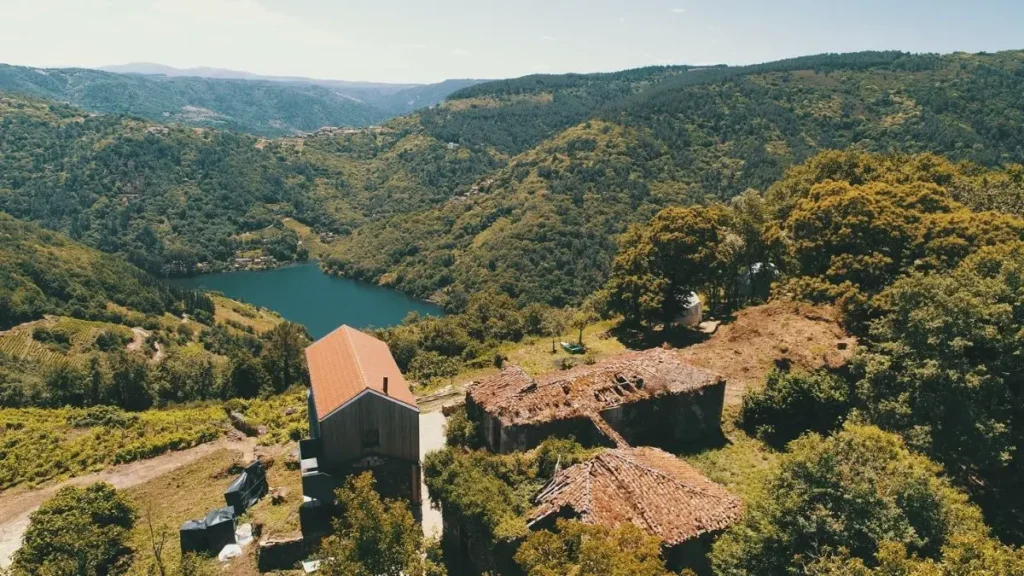
The road to O Castro de Mourelos thins out the closer you get. You leave the LU-5809, climb past oak and chestnut, and arrive at a cluster of stone buildings that until recently were quietly returning to forest. Today there are four geodesic domes among the trees, a renovated studio loft with a communal kitchen, and a working programme of creative residencies running on Galician hours. The parish is San Xulián de Mourelos, the municipality is O Saviñao, and the view from the property reaches across the Miño valley toward Belesar. None of which quite prepares you for what Tatiana Alonso and Davoud Gerami are actually doing here — which is less a rural tourism business than an argument about how this territory should be inhabited.
Q. Tell us, in your own words, what you do and why it matters.
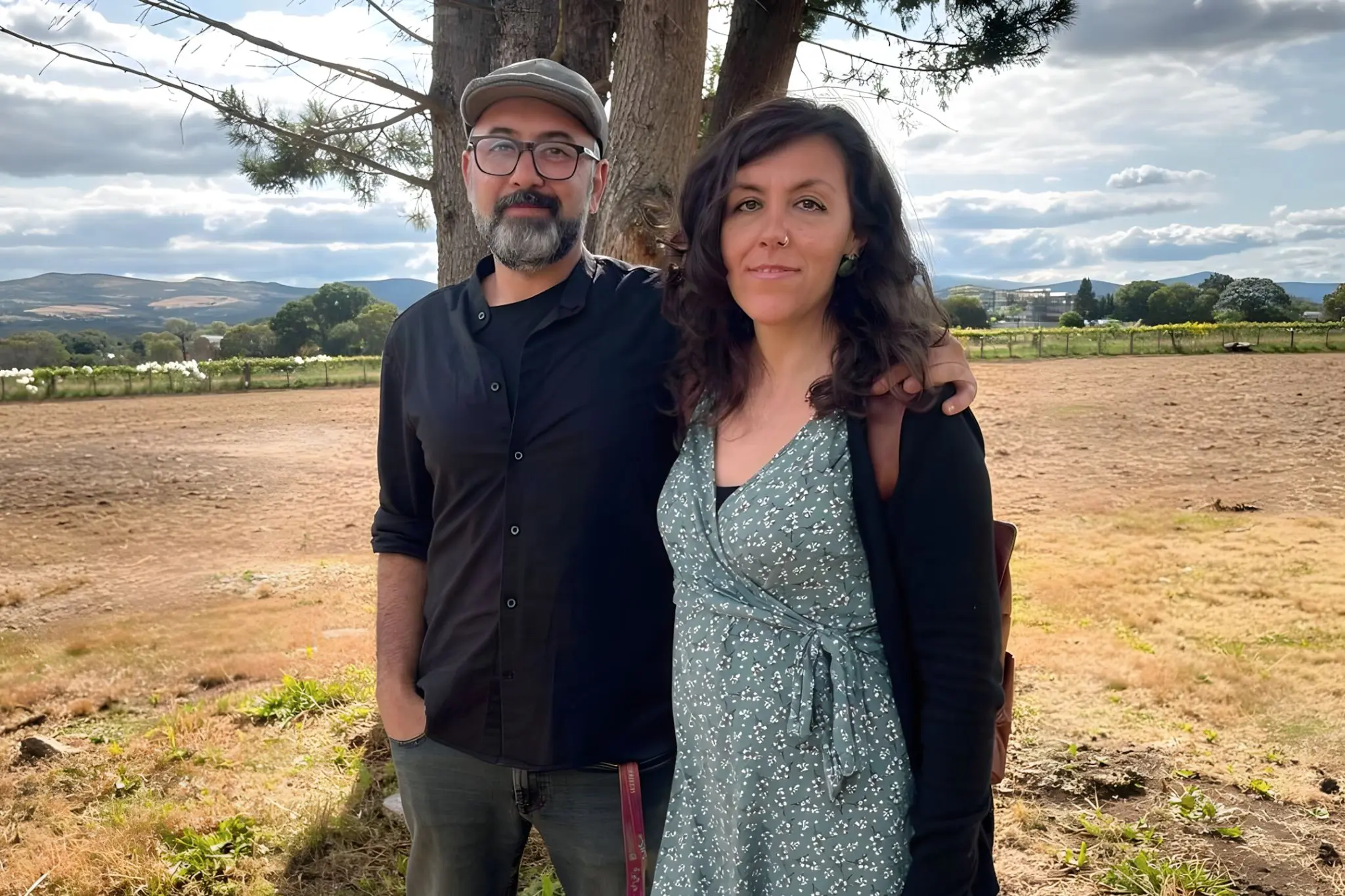
We are Tatiana Alonso and Davoud Gerami, partners in life and work, and founders of O Castro Art Village. We are also the parents of our three-year-old daughter Mey — a name that means “divine wine” in Persian Sufism. Beyond raising her, we manage this creative centre: day-to-day operations, planning, navigating Spain’s labyrinthine bureaucracy, designing courses and activities, clearing land, planting, pruning, and welcoming people. What matters most to us is the societal and cultural impact of the work. We are revolutionaries who intend to create a better and more just world — not through violence, but by creating a safe space for cultural innovation. We take the work seriously, and we are humbly proud of what we do.
Q. Where are you both from, and how did you end up here?
Tatiana is a translator and cultural programmer from Mos, in Pontevedra. Davoud is an Iranian-Canadian filmmaker, teacher, and engineer who has lived and worked in various corners of the planet. We are here for O Castro. Years ago, disillusioned with the world of cinema and tired of contributing to a corrupt academia, both under the yoke of corporate sponsorship, Davoud felt the need to create a haven for artists, thinkers, makers, and inventors — a place of dialogue and exchange without imposed limitations, outdated agendas, or exclusive quotas. Initially the idea was to build something in Japan, where he was based at the time. Later, while shooting a documentary in Asia, he made friends with a Galician man, who became the reason he visited Galicia and eventually found O Castro. It was love at first sight: first with the landscape, then with the neighbours, and then with Tatiana, who has fed the passionate engine driving the project ever since.
Q. How would you describe your relationship with the Ribeira Sacra to someone who has never been?
Imagine looking at a landscape for days, months, years, and never tiring of it. Not because it is the most beautiful place you have ever seen, but because you recognise its ever-changing countenance and find love and benevolence in it regardless of what it throws at you. If landscapes had genders, the Ribeira Sacra do Miño would certainly be a woman — and a Galician woman at that: beautiful, strong, unpredictable, and nevertheless loving. This is the bosom you retire to when faced with the cruelties of a world run amok with greed, Capitalism, and war. This is where fresh air travels up your nostrils and feeds a brain that wants to think, and think hard. This is where ideas come to you after a long walk in the oak and chestnut forest. Here you do not need to share a language with the neighbours to hear about their hard life as heroic viticulturists. Their callused hands speak the truth, and you have no choice but to fall in love with them, and offer a hand when you can.
Q. What does this place have that you haven’t found anywhere else? And what does it still lack?
It has the spark, the magic, the potential. It lacks infrastructure, workforce, and a government that actually wants young, innovative people to repopulate the area and make it what it deserves to be. The problem of the world today, except in a handful of countries, is the absence of systemic, symbiotic, grassroots development policies that are truly sustainable. We are not talking about the farcical “greenwashing” policies of the EU. We mean genuinely thoughtful, long-term policy that understands immigration as a friend, not an adversary; a system that admits to its labour shortage and adopts measures to attract hardworking people to the rural world. A system that encourages mad ideas like ours, recognises the dedication behind them, and paves the way rather than building roadblocks.
We need to market Ribeira Sacra as a place to stay for the long term, not a tourist destination — a place to get discovered, to make meaningful professional relationships, and to create work that matters.
Q. Walk us through what you’re building.
For the past seven years, we have been turning an abandoned village into a centre for creativity, arts, and innovation. The plan is to convert the whole village into a single facility hosting artists, innovators, thinkers, and makers — people who live and work here as creative residents to develop ideas, run projects, and contribute to the local culture through exhibitions, educational programs, and grassroots engagement. Think of a machine that mixes international talent with local talent, and out of it comes the answer to a few of our universal problems.
Q. What’s there now, and what’s still to come?
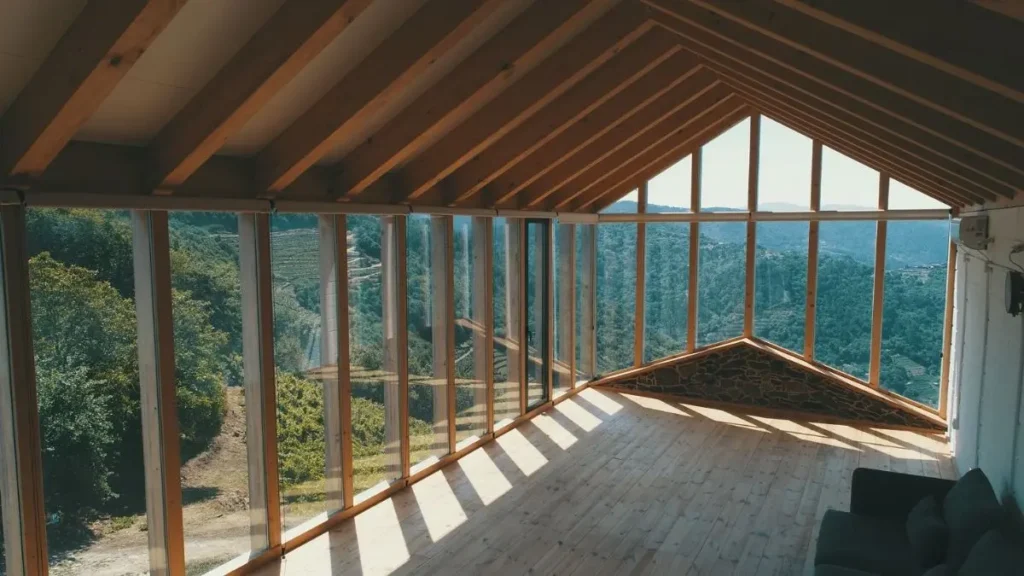
So far we have renovated one building out of nine, and built four geodesic domes. The renovated building has a studio loft where residents work, and a communal kitchen and eatery where we cook, eat, and keep long conversations going after a hard day of work — and trade recipes. The domes serve as resident rooms. Each one has a full bathroom, hot water, and comfortable beds, with panoramic views of the forest. You fall asleep listening to owls. If finance and red tape allow, the next phase is to renovate the remaining buildings and turn the village into stable infrastructure for what we already do — at greater scale and for a wider audience.
Q. What is the hardest part of doing this work, in this specific place?
The lack of infrastructure and the abundance of bureaucracy. We have been begging the authorities for years and we still do not have municipal water, fibre-optic internet, or pothole-free access roads. On top of that, the requirements imposed by the so-called “law” frequently contradict each other. One agency demands wide access roads so ambulances can reach the top of the mountain; another tells us we cannot build access roads in a forest. The contradictions consume time and energy. Had it not been for the love of what we do, of each other, and of this territory, we would have been discouraged and stopped a long time ago.
Q. What’s coming up that readers should know about?
We run festivals, exhibitions, and workshops year-round — film, music, electronic and video art — and offer workshops in cinema, astronomy, experimental music, acting, ceramics, and herbal medicine, among others. Our Instagram is the live calendar; the programme moves with the seasons and the residents in-house.
Q. If you could change one thing about how the Ribeira Sacra is seen — by visitors, by institutions, by the outside world — what would it be?
The way it’s marketed. Ribeira Sacra is not a weekend getaway of river boat rides, wine tastings, and barbecue until you pass out. It is full of people and projects dedicated to arts and culture; the number of musicians and artists living here, scattered across the territory, is astounding. We work with many of them. For these projects to thrive, the region needs to be presented as a place to stay long-term — a place to discover and be discovered, to build meaningful professional relationships and create work that matters. We are proud to say we have already started that process. People who come to us stay a while, befriend the locals, develop their next project, and contribute. They arrive with a full hand and leave with a full hand. And the time they share here makes both them and the locals richer.
Fire Round
A place
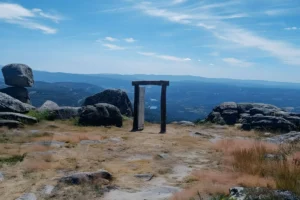
The underwater castro, only visible in dry seasons every four or five years.
A dish
The Persian food Davoud cooks in our kitchen with local ingredients. He might even share the recipe.
A route
From O Castro to Belesar, through the oak forest.
A word
Friendship.
A misconception
That the Sil is the only river here. The Miño also exists.
All photos courtesy of O Castro Art Village. Not for reproduction without written permission.